Archive for May, 2014

May 6,

Assassination of Chief Secretary of Ireland, Lord Frederick Cavendish at Today in Irish History

May 6: TODAY in Irish History:

** ** **
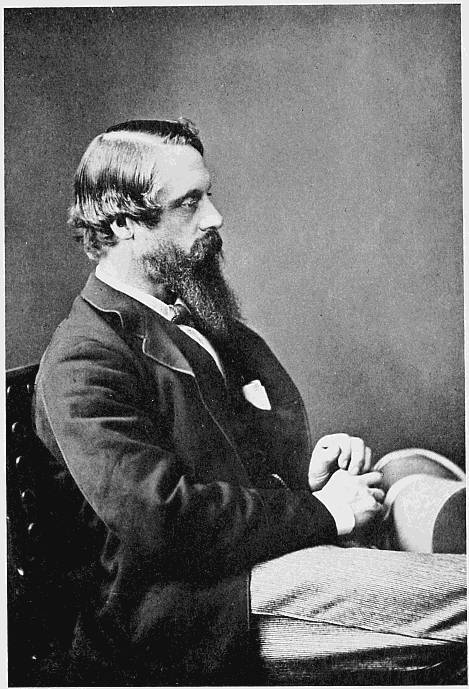
Lord Frederick Cavendish

Snippets of Irish History by Conor Cunneen IrishmanSpeaks 

Conor is a Chicago based Motivational Humorous Business Speaker, Author and History buff.

***********************
WATCH: A Short History of Ireland

***********************

shamrockshamrockshamrockshamrockshamrockshamrockshamrockshamrock

.

1728: Catholics lose the right to vote.

The disenfranchising Act of 1727 receives Royal Assent on this day, ensuring that Catholics in Ireland would not be allowed to vote.

Between 1695-1728, Britain introduced harsher and harsher laws in Ireland aimed at the Catholic population.  These laws included:

Restricting the rights of Catholics to education

Preventing Catholics from buying land

Preventing Catholics from holding public positions

Preventing Catholics from entering the legal profession

Catholics did not earn any major level of suffrage or the right to election until 1829 when Daniel O’Connell’s election in County Clare forced through the Catholic Emancipation Act.

Daniel O'Connell in for the love of being Irish

Page on Daniel O’Connell in For the Love of Being Irish

.

shamrockshamrockshamrockshamrockshamrockshamrockshamrockshamrock

.

1844: Philadelphia Riots Target Irish Catholics

Irish Catholics in the Kensington slum area of Philadelphia are attacked by a mob of Nativists, a group of virulent anti-Catholic, anti-immigrant activists whose philosophy permeated much of American Protestant society at the time. The riots last for a number of days.

.

READ: Philadelphia Bible Riots Pit Catholics against Protestant

.

Contemporary Illustration of 1844 Riots

.

shamrockshamrockshamrockshamrockshamrockshamrockshamrockshamrock

.

1882: Assassination of Lord Frederick Cavendish – Chief Secretary of Ireland

Assassination of the newly appointed Chief Secretary of Ireland Lord Frederick Cavendish and his under secretary T.H. Burke. The chief secretary had arrived in Dublin only that day and was walking in the city’s Phoenix Park in the evening when set upon by members of a nationalist secret society, the Invincibles.

The event occurred just after Charles Stewart Parnell, leader of the Irish Home Rule Party in the British House of Commons, was released from prison. Parnell spoke out loudly against the murders which shocked English society and received very little support in Ireland. One of the leaders of the Invincibles James Carter turned States evidence which resulted in convictions and the hanging of five of the gang.

Lord Cavendish

.

shamrockshamrockshamrockshamrockshamrockshamrockshamrockshamrock

.

Want to learn more about Ireland? See these images and more in the acclaimed For the Love of Being Irish

Irish gift ideas. Best selling Irish booksRonnie Drew and Luke Kelly - Musical Irish Gifts to the worldJoyce Image in For the Love of Being IrishMichael Collins: Image from For the Love of Being Irish

___________________________________

This history is written by Irish author, business keynote speaker and award winning humorist IrishmanSpeaks – Conor Cunneen. If you spot any inaccuracies or wish to make a comment, please don’t hesitate to contact us via the comment button.

Visit Conor’s YouTube channel IrishmanSpeaks to Laugh and Learn.

Tags: Best Irish Gift, Creative Irish Gift, Unique Irish Gifts, Irish Books, Irish Authors, Today in Irish History TODAY IN IRISH HISTORY (published by IrishmanSpeaks)


May 5,

Death of Hunger Striker Bobby Sands – Execution of 1916 Rebel John MacBride

May 5: TODAY in Irish History:

** ** **

Snippets of Irish History by Conor Cunneen IrishmanSpeaks 

Conor is a Chicago based Motivational Humorous Business Speaker, Author and History buff.

***********************
WATCH: A Short History of Ireland

***********************

shamrockshamrockshamrockshamrockshamrockshamrockshamrockshamrock

.

1864: Sir Henry Hughes Wilson

Birth in County Longford of Sir Henry Hughes Wilson.

Wilson was deputy chief of staff of the British Expeditionary Force on the Western Front at the outbreak of World War I and was appointed Imperial Chief of Staff in 1918, a position he held until he retired in 1922 to become MP for North Down.

Wilson was shot by two Irish volunteers in London in June 1922, one of whom Joseph O’Sullivan (1897-1922)  had lost a leg fighting in the British Army at Ypres. The killing of Wilson after the Treaty had been signed has never been satisfactorily explained with some sources suggesting Michael Collins order the killing in retaliation for ongoing anti-Catholic violence in Northern Ireland.

Sir Henry Hughes Wilson

Sir Henry Hughes Wilson  1864-1922

.

shamrockshamrockshamrockshamrockshamrockshamrockshamrockshamrock

.

1916: Execution of 1916 rebel John MacBride

Born in Mayo in 1865. MacBride travelled to America in 1896 to further the aims of the I. R. B., thereafter travelling to South Africa where he raised the Irish Transvaal Brigade to fight against the English during the Second Boer War where as happened too often in history, Irish fought Irish. He married the Irish nationalist and one time W.B. Yeats lover Maude Gonne in 1903. During the Rising, he fought at the Jabob’s factory. MacBride was father of Irish Nobel Peace prizewinner and one time militant Republican Sean MacBride

.

John MacBride
John MacBride 1868-1916

.

READ: Irish in the Boer War

.

shamrockshamrockshamrockshamrockshamrockshamrockshamrockshamrock

.

1938: Churchill Decries Handing Over of Irish Ports

Churchill and De Valera meeting 1953

Churchill and De Valera at 1953 meeting

In a House of Commons speech, Winston Churchill rails against the agreement that returns Irish ports “the sentinel towers of the western approaches”back to Ireland. Churchill appreciated the potential benefit to Britain of the ports in the event of war. The fact that Britain did not have access to the ports during WWII played a major role in Ireland’s effort to remain neutral.

“If we are denied the use of Lough Swilly and have to work from Lamlash, we should strike 200 miles from the effective radius of our flotillas, out and home; and if we are denied Berehaven and Queenstown, and have to work from Pembroke Dock, we should strike 400 miles from their effective radius out and home. These ports are, in fact, the sentinel towers of the western approaches, by which the 45,000,000 people in this Island so enormously depend on foreign food for their daily bread, and by which they can carry on their trade, which is equally important to their existence.”

.

shamrockshamrockshamrockshamrockshamrockshamrockshamrockshamrock

.

1981:Death of Hunger Striker Bobby Sands

bobby sands mural

IRA hunger striker Bobby Sands dies in prison following a 66 day hunger strike. Sands would be the first of ten IRA men to die in an effort to gain political status in a very public battle with British Prime Minister Margaret Thatcher. In the House of Commons Thatcher commented on Sands death “Mr. Sands was a convicted criminal. He chose to take his own life. It was a choice that his organization did not allow to many of its victims”.

Thatcher’s view of the prisoners and the IRA was that they were murderous thugs. Nationalist Ireland’s view the complete opposite.

The IRA played a very astute international campaign during the hunger strikes gaining widespread support and attention for their cause. The deaths of Sands and his colleagues once again boosted IRA recruitment. The support for the strike was evidenced by Sands winning the vacant House of Commons seat for MP for Fermanagh and South Tyrone in a by-election necessitated by the death of sitting MP Frank Maguire. In a hugely emotional campaign, Sands defeated Unionist candidate Harry West.

The demands of the prisoners included:

1.The right not to wear a prison uniform;

2.The right not to do prison work;

3.The right of free association with other prisoners, and to organise educational and recreational pursuits;

4.The right to one visit, one letter and one parcel per week;

5.Full restoration of remission lost through the protest.

Britain never formally acceded to the strikers’ demands but three days after the hunger strikes finally came to an end on October 3, Ulster Secretary James Prior announced a number of concessions including the right to wear civilian clothes and the restoration of partial remission for those who obeyed prison rules for three months.

.

shamrockshamrockshamrockshamrockshamrockshamrockshamrockshamrock

.

Want to learn more about Ireland? See these images and more in the acclaimed For the Love of Being Irish

Irish gift ideas. Best selling Irish booksRonnie Drew and Luke Kelly - Musical Irish Gifts to the worldJoyce Image in For the Love of Being IrishMichael Collins: Image from For the Love of Being Irish

___________________________________

This history is written by Irish author, business keynote speaker and award winning humorist IrishmanSpeaks – Conor Cunneen. If you spot any inaccuracies or wish to make a comment, please don’t hesitate to contact us via the comment button.

Visit Conor’s YouTube channel IrishmanSpeaks to Laugh and Learn.

Tags: Best Irish Gift, Creative Irish Gift, Unique Irish Gifts, Irish Books, Irish Authors, Today in Irish History TODAY IN IRISH HISTORY (published by IrishmanSpeaks)