

June 5: TODAY in Irish History:
** ** **

Snippets of Irish History by Conor Cunneen IrishmanSpeaks 
Conor is a Chicago based Motivational Humorous Business Speaker, Author and History buff.
***********************
***********************
NEW NEW

SHEIFGAB! Staying Sane, Motivated and Productive in Job Search.
An insightful, realistic, yet humorous book on the job search process by Today in Irish History Curator Conor Cunneen
Special accessible price for job seekers on Kindle of $2.99
.
.
1868: James Connolly
1916 rebel leader and ardent socialist James Connolly is born to poverty stricken Irish parents in Edinburgh Scotland. At age 14, he joined the British Army (Royal Scots Regiment) falsifying his age. He was posted to Ireland, serving much of his time in the Cork area.
Despite the fact he left school at age 11, Connolly was an ardent reader and astute social commentator who railed against the extreme poverty and disease which consumed working class society. In 1890, he married Lillie Reynolds and the following year deserted from a British Army he had grown to despise. He then spent some time in Scotland becoming Secretary of the Scottish Socialist Federation before moving to Dublin in a similar capacity and becoming a close ally of James Larkin.
Following the General Strike of 1913 which deteriorated into violent street battles between the authorities and striking workers, Connolly founded the Irish Citizens Army along with an ex-British Army officer Jack White. The initial purpose was to protect striking workers but after the strike ceased the Irish Citizen Army morphed into a militant nationalist movement which would be one of the main players during the 1916 rebellion.
Sentenced to death for his involvement in the 1916 Rising, Connolly was so critically wounded that he had to be strapped to a chair for his execution. The imagery of Connolly’s execution has proved a potent rousing call for IRA recruitment ever since.

- James Connolly, wife Lilly, daughters Mona and Nora

.
READ: James Connolly in the United States
.
READ: Execution of James Connolly
.
.
1916: Lord Kitchener Death
Death of Field Marshal Horatio Herbert Kitchener, (b. 24 June 1850), when the HMS Hampshire carrying him to negotiations with Russia is sunk by a German mine.
Kitchener was born in Ballylongford, County Kerry, the son of Lt. Col. Henry Horatio Kitchener who settled in Ireland under a scheme to encourage the purchase of land after the recent potato famine. The father was an unpopular tenant evicting landlord. The young Kitchener was commissioned into the Royal Engineers on 4 January 1871.
Kitchener saw active service in numerous British colonial conflicts: Africa, where he achieved fame as Lord Kitchener of Khartoum, the Boer War where he conducted an aggressive campaign herding many Boer civilians into concentration camps and India. At the outset of World War I, he was appointed Secretary of State for War.
The iconic Kitchener poster stating “Your Country Needs You” probably ensures Kitchener is one of the most famous faces from World War I.
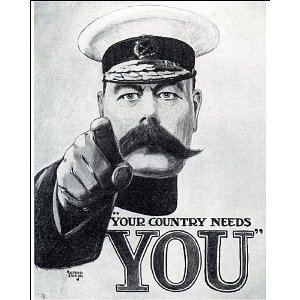
- Irish born Lord Kitchener
Kitchener was one of a number of high-profile English military personnel born in Ireland, the most famous being the Duke of Wellington.
.
.
2004: Ronald Reagan
Death of Ronald Reagan whose great grandfather came from Ballyporeen, Co. Tipperary. In For the Love of Being Irish, author Conor Cunneen compares Reagan and Jack Kennedy
” The two most “Irish” of Presidents were Jack Kennedy and Ronald Reagan. Kennedy was born into somewhat ill-gotten wealth generated by the Catholic, but not very saintly Joe Kennedy while Reagan was born in relatively poor circumstances to an alcoholic father and caring mother. Kennedy was a charmer with strong family relationships, although not always bound by marriage vows. Reagan was a great raconteur, often of ethnic, profane stories that he liked to share with other Irish American politicians including Daniel Patrick Moynihan. Paradoxically, the “Great Communicator” Reagan who exuded warmth and care to the American people had poor relationships with family members.
Kennedy visited Ireland immediately after his “Ich Bin Ein Berliner” speech at the Berlin Wall. Although Reagan has never been as embraced as warmly by the Irish, he received rapturous reception when he visited his ancestral home at Ballyporeen, Co. Tipperary in 1984.”

Illustration of Ronald Reagan in For the Love of Being Irish
.
Ronald Reagan Speaking at Ballyporeen, Co. Tipperary 1984
.
.
WATCH: A Short History of Ireland
Want to learn more about Ireland? See these images and more in the acclaimed For the Love of Being Irish


___________________________________
This history is written by Irish author, business keynote speaker and award winning humorist IrishmanSpeaks – Conor Cunneen. If you spot any inaccuracies or wish to make a comment, please don’t hesitate to contact us via the comment button.
Visit Conor’s YouTube channel IrishmanSpeaks to Laugh and Learn.
Tags: Best Irish Gift, Creative Irish Gift, Unique Irish Gifts, Irish Books, Irish Authors, Today in Irish History TODAY IN IRISH HISTORY (published by IrishmanSpeaks)


 Today In Irish History