Archive for ‘Today in Irish History’

April 25,

1916 Rising Continues – British Troops Move Into Dublin at Today in Irish History

April 25: TODAY in Irish History:

** ** **

Snippets of Irish History by Conor Cunneen IrishmanSpeaks

Conor is a Chicago based Motivational Humorous Business Speaker, Author and History buff.

.

shamrockshamrockshamrockshamrockshamrockshamrockshamrockshamrock

.

1916: British Troops Move into Dublin

One day after the Proclamation of the Irish Republic by Patrick Pearse on Easter Monday and a day of limited activity, British authorities start to take action. By the end of the day, 7.000 troops will be moved into Dublin from Belfast and the Curragh.

Martial law is declared by Lord Lieutenant Lord Wimborne and power is handed over to military authorities. Despite its iconic status in history, occupiers of the General Post Office see little direct action, apart from incoming British artillery.

The Rising was not popular with Dublin’s population.

(There are numerous reports that Irish rebel prisoners were booed and harried by Dubliners after the surrender.) Fifteen year old Martin Walton joined the rebellion on Tuesday at Jacob’s factory and describes Dubliners negative reaction to the rebels. ““When I arrived then at Jacob’s the place was surrounded by a howling mob roaring at the Volunteers inside, ‘Come out to France and fight, you lot of so-and-so slackers’. And then I remember the first blood I ever saw shed. There was a big, very, very big tall woman with something very heavy in her hand and she came across and lifted up her hand to make a bang at me. One of the Volunteers upstairs saw this and fired and I just remember seeing her face and head disappear as she went down like a sack. That was my baptism of fire, and I remember my knees nearly going out from under me. I would have sold my mother and father and the Pope just to get out of that bloody place.”

Captain J.C. Bowen-Colthurst

British authorities reacted in a generally restrained manner during the early days of the Rising. Exceptions included Captain J.C. Bowen-Colthurst,  invalided back from the war in Europe who summarily executed a totally innocent 17 year old JJ Coade on Tuesday evening.   That was the start of his madness. Bowen-colthurst was a native of Dripsey, Co. Cork  born to an Anglo-Irish Protestant ascendancy family in 1880.  He arrested two journalists and pacifist Frances Sheehy Skeffington, all of whom would be arbitrarily shot the following day at Bowen-Colthurst’s orders. Bowen-Colthurst would be court-martialed for his actions. He was found guilty but insane, spent a short period in a mental institution and moved to Canada where he died in 1966.

Bowen-Colthurst was a native of Dripsey, Co. Cork  born in 1880 to an Anglo-Irish Protestant ascendancy family.

British mounted troops Dublin 1916

.

.

shamrockshamrockshamrockshamrockshamrockshamrockshamrockshamrock

.

Other Events on This Day in Irish History

1945: Cork born Major League Baseball player Anthony John “Tony” Mullane

Anthony Mullane Cork born baseball player

Anthony Mullane Cork born baseball player

Death of Cork born Major League Baseball player Anthony John “Tony” Mullane who was variously named the “Count” and “The Apollo of the Box.” Over  a thirteen year career (1881-1894), he played for seven teams including   St. Louis Browns, Cincinnati Reds and Baltimore Orioles

.

shamrockshamrockshamrockshamrockshamrockshamrockshamrockshamrock

.

Want to learn more about Ireland? See these images and more in the acclaimed For the Love of Being Irish

Irish gift ideas. Best selling Irish booksRonnie Drew and Luke Kelly - Musical Irish Gifts to the worldJoyce Image in For the Love of Being IrishMichael Collins: Image from For the Love of Being Irish

___________________________________

This history is written by Irish author, business keynote speaker and award winning humorist IrishmanSpeaks – Conor Cunneen. If you spot any inaccuracies or wish to make a comment, please don’t hesitate to contact us via the comment button.

Visit Conor’s YouTube channel IrishmanSpeaks to Laugh and Learn.

Tags: Best Irish Gift, Creative Irish Gift, Unique Irish Gifts, Irish Books, Irish Authors, Today in Irish History TODAY IN IRISH HISTORY (published by IrishmanSpeaks)

April 23,

The Day Before 1916 Rising – 1918 Anti-Conscription Strike at Today in Irish History

April 23: TODAY in Irish History:

** ** **

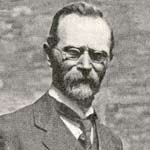
Eoin McNeil

Snippets of Irish History by Conor Cunneen IrishmanSpeaks

Conor is a Chicago based Motivational Humorous Business Speaker, Author and History buff.

.

shamrockshamrockshamrockshamrockshamrockshamrockshamrockshamrock

.

1916: The Day Before the Rising

Approximately 1,000 copies of The Proclamation of the Irish Republic are printed in Liberty Hall in a print office set up by James Connolly. The proclamation will be read by Patrick Pearse outside the General Post Office on Sackville Street (now called O’Connell Street) on Monday April 24th.

The proclamation was printed secretly on an old and poorly maintained Wharfedale Stop Cylinder Press in the printing office that had been set up by James Connolly in the basement in the original Liberty Hall in Beresford Place, Dublin.

.

READ: Printing of Proclamation

.

All seven signatories of the Proclamation Pearse, James Connolly, Thomas Clarke, Thomas MacDonagh, Sean MacDermott, Joseph Plunkett and Eamonn Ceannt would be executed by British authorities.

Easter Sunday was a day of confusion and indecision amongst the rebel movement. The Irish Volunteers Chief of Staff, Eoin MacNeil, in defiance of Patrick Pearse, cancelled the planned manoeveres of volunteers, by placing a notice in that morning’s newspapers. Pearse and company had expected the manoeveres to be the instigation of a Rising, he and his colleagues knew had little chance of success. McNeil’s cancellation occured partly because he had only just become aware of the true nature of the manoeveres and also due to the capture of Roger Casement and the major arms shipment aboard the Aud of the coast of Kerry.

.

An noon on Easter Sunday, Pearse and the Military Council decided to postpone the insurrection until the follow day, Easter Monday April 24th. Despite a long and bleak history of failed insurrections due to leaks and informers to British authorities, it appears that for once the Irish rebels were able to keep their plans secret.

.

shamrockshamrockshamrockshamrockshamrockshamrockshamrockshamrock

.

1918: General Strike against Conscription

Irish Trade Unions call a general strike in protest against the imposition of conscription in Ireland. The British Military Service Act of 1916 introduced conscription into mainland Britain. At the time, Ireland was excluded. However, with manpower at a  critical level in 1918, the government of Lloyd George started agitating for conscription of Irish males and on April 16, 1918 formally extending conscription to Ireland. Not surprisingly, it provoked a firestorm of resentment. While an estimated 200,000 Irish fought in the British Army during World War I, many had enlisted in the idealistic early days of 1914, partly prompted by Irish politician John Redmond, although the bulk of the soldiers were from Ulster.

Britain’s reaction to the 1916 Rising generated huge resentment and virulent opposition to most things English. Thus the proposed conscription legislation was seen as anathema to the Irish who no longer believed that the war to end all wars was to save the small countries of Europe.

The General Strike and anti-conscription activity gained huge support including a statement from the Irish Catholic hierarchy part of which read:

“To enforce conscription here without the consent of the people would be perfectly unwarrantable and would soon and inevitably end in defeating its own purposes.

‘Had the government in any reasonable time given Ireland the benefit of the principles, which are declared to be at stake in the war, by concession of a full measure of self-government, there would have been no occasion for contemplating forced levies for her now. What between mismanagement and mischief-making this country has already been deplorably upset, and it would be a fatal mistake, surpassing the worst blunders of the past four years, to furnish a plea now for desperate courses by an attempt to enforce conscription. With all the responsibility that attaches to our pastoral office, we feel bound to warn the government against entering on a policy so disastrous to the public interest, and to all order, public and private.”

In the light of intense opposition that almost certainly would have led to violence, the British government did not implement conscription in Ireland.

Dublin Archbishop William Walsh who led opposition to conscription


.

shamrockshamrockshamrockshamrockshamrockshamrockshamrockshamrock

.

Want to learn more about Ireland? See these images and more in the acclaimed For the Love of Being Irish

Irish gift ideas. Best selling Irish booksRonnie Drew and Luke Kelly - Musical Irish Gifts to the worldJoyce Image in For the Love of Being IrishMichael Collins: Image from For the Love of Being Irish

___________________________________

This history is written by Irish author, business keynote speaker and award winning humorist IrishmanSpeaks – Conor Cunneen. If you spot any inaccuracies or wish to make a comment, please don’t hesitate to contact us via the comment button.

Visit Conor’s YouTube channel IrishmanSpeaks to Laugh and Learn.

Tags: Best Irish Gift, Creative Irish Gift, Unique Irish Gifts, Irish Books, Irish Authors, Today in Irish History TODAY IN IRISH HISTORY (published by IrishmanSpeaks)

Tags: