Posts tagged ‘IRA’

May 26,

The Battle of Tara Hill – Composer Victor Herbert at Today in Irish History

May 26: TODAY in Irish History:

** ** **
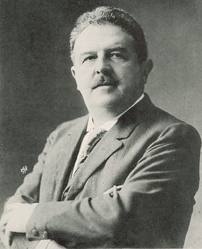
Composer Victor Herbert

Snippets of Irish History by Conor Cunneen IrishmanSpeaks 

Conor is a Chicago based Motivational Humorous Business Speaker, Author and History buff.

***********************

***********************

NEW                    NEW

Product Details

SHEIFGAB! Staying Sane, Motivated and Productive in Job Search.

An insightful, realistic, yet humorous book on the job search process by Today in Irish History Curator Conor Cunneen

Special accessible price for job seekers on Kindle of $2.99

.

.
shamrockshamrockshamrockshamrockshamrockshamrockshamrockshamrock

.

1798: The Battle of Tara Hill

The 1798 Rebellion would become THE bloodiest conflict in modern Irish history with atrocities committed on both sides. The Battle of Tara Hill, Co Meath sees another rebel defeat against English forces. Up to  400 United Irishmen are killed. About 30 English troops die.

In Wexford, Fr. John Murphy leads a small group of rebels in a minor victory against The Camolin Cavalry, killing two troops. The Cavalry was a group of mounted yeomen from the village of Camolin, Co. Wexford. The official report of the action read:

“An officer and 20 men ordered to burn the house of Miles Leary near Killena—did not burn it as he promised to deliver up all the Arms in his possession early the next morning—dined at free quarters at the house of Bryan Leacy’s Killena-mill, where the detachment [was joined] by a Corporal and four men, who had been sent towards Courtown to bring in the body of Catherine Murphy, charged with having administered the United oath to several Men.

“On the party’s march to Camolin, they were met by a messenger from Lieut. Bookey, mentioning that the long expected Rebellion had broke out in several parts of the country, and that an entire family of Protestants had been murdered by the Insurgents near Scarawalsh. Party hastened to Camolin (leaving the prisoner in charge with some Loyalists who lodge her safe in Camolin) where they receive an order from Isaac Cornock, Esq., a Magistrate, to repair to Ferns, and there join an Officer’s guard of the North Cork Regiment of Militia. On arrival in Ferns, Lieut. Smith and a party was ordered towards Scarawalsh, where the murders were committed, to see if this information was true, and Lieut. Bookey with another Party rode towards the Harrow, where he met a large party of Insurgents armed with Pikes and some Arms.

“The Lieut. rode before the Party, and ordered the rebels to surrender, and deliver up their Arms, on which they discharged a volley at the Party, accompanied with a shower of stones, some of which brought Lieut. Bookey from his horse, as also John Donovan, a private in the Corps. The party after firing a few shots, finding themselves overpowered by the Rebels, retreated to Ferns, where they remained ‘till day break, melancholy spectators of the devastation committed by the Rebels. The information of the Murders at Scarawalsh found to be true.”

Source. H. F. B. Wheeler & A. M. Broadley, The War in Wexford: an account of the rebellion in the south of Ireland in 1798, told from original documents (London 1910) pp. 83-4.

.

Free Download: The War in Wexford: an account of the rebellion in the south of Ireland in 1798

.

shamrockshamrockshamrockshamrockshamrockshamrockshamrockshamrock

.

1924: Composer Victor Herbert

Death in New York of Dublin born composer Victor Herbert (b. 1859). Herbert was a prolific composer, producing two operas, 43 operettas, music to 10 stage productions and numerous other compositions including many for the Ziegfeld Follies.

He was co-founder of the American Society of Composers, Authors, and Publishers (ASCAP), serving as vice president for a decade.
Victor Herbert

.

READ: Victor Herbert at Songwriters Hall of Fame.

.

shamrockshamrockshamrockshamrockshamrockshamrockshamrockshamrock

.

1972: Special Criminal Court

The Special Criminal Court is reactivated by the Irish government. Originally established by the 1939 Offences Against the State Act to try IRA members in a juryless court, the troubles of the 1970s forced the government to re-establish the court. Although initially established for anti-terrorist activity, the court now tries cases related to organized crime.

.

shamrockshamrockshamrockshamrockshamrockshamrockshamrockshamrock

.

Want to learn more about Ireland? See these images and more in the acclaimed For the Love of Being Irish

Irish gift ideas. Best selling Irish booksRonnie Drew and Luke Kelly - Musical Irish Gifts to the worldJoyce Image in For the Love of Being IrishMichael Collins: Image from For the Love of Being Irish

___________________________________

This history is written by Irish author, business keynote speaker and award winning humorist IrishmanSpeaks – Conor Cunneen. If you spot any inaccuracies or wish to make a comment, please don’t hesitate to contact us via the comment button.

Visit Conor’s YouTube channel IrishmanSpeaks to Laugh and Learn.

Tags: Best Irish Gift, Creative Irish Gift, Unique Irish Gifts, Irish Books, Irish Authors, Today in Irish History TODAY IN IRISH HISTORY (published by IrishmanSpeaks)


May 12,

James Connolly Execution – Actor Gabriel Byrne at Today in Irish History

May 12: TODAY in Irish History:

** ** **

James Connolly 1868-1916

Snippets of Irish History by Conor Cunneen IrishmanSpeaks 

Conor is a Chicago based Motivational Humorous Business Speaker, Author and History buff.

.

shamrockshamrockshamrockshamrockshamrockshamrockshamrockshamrock

.

1916: Final Executions of Rebels: James Connolly and Sean MacDiarmada

The last executions of 1916 rebels are carried out. 90 rebels were condemned to death. All but 15 were commuted to lengthy prison terms (most whof those were released in 1917.) Some who died were unlucky. Patrick Pearse’s brother Willie seems to have been executed simply because of their relationship. US born Eamonn De Valera seemingly escaped death because authorities were fearful of American reaction.

The executions were a watershed in Irish attitude to English rule. The vast majority of the Irish population begrudgingly accepted English rule and believed the Rising was an absurd venture. From a pure military viewpoint they were right. However, the execution of men who after their capture had been jeered and booed by Dubliners created a raft of martyrs that energized Irish nationalism.

The last two executed were:

Seán MacDiarmada:

sean macdiarmada
Sean MacDiarmada 

Born in 1884 in Leitrim, MacDiarmada emigrated to Glasgow in 1900, and from there to Belfast in 1902. A member of the Gaelic League, he was acquainted with Bulmer Hobson. He joined the Irish Republican Brotherhood in 1906 while still in Belfast, later transferring to Dublin in 1908 where he assumed managerial responsibility for the I. R. B. newspaper Irish Freedom in 1910. Although MacDiarmada was afflicted with polio in 1912, he was appointed as a member of the provisional committee of Irish Volunteers from 1913, and was subsequently drafted onto the military committee of the I. R. B. in 1915. During the Rising MacDiarmada served in the G. P. O.

James Connolly

James Connolly 1868-1916

Born in Edinburgh in 1868, Connolly was first introduced to Ireland as a member of the British Army. Despite returning to Scotland, the strong Irish presence in Edinburgh stimulated Connolly’s growing interest in Irish politics in the mid 1890s, leading to his emigration to Dublin in 1896 where he founded the Irish Socialist Republican Party. He spent much of the first decade of the twentieth century in America, he returned to Ireland to campaign for worker’s rights with James Larkin. A firm believer in the perils of sectarian division, Connolly campaigned tirelessly against religious bigotry. In 1913, Connolly was one of the founders of the Irish Citizen Army. During the Easter Rising he was appointed Commandant-General of the Dublin forces, leading the group that occupied the General Post Office. Unable to stand to during his execution due to wounds received during the Rising, Connolly was executed while sitting down on 12 May 1916. He was the last of the leaders to be executed.

.

.

1950: Actor Gabriel Byrne

Gabriel Byrne is born in Dublin. Now internationally famous, Irish TV viewers fondly remember a young Gabriel Byrne in RTE hit series Bracken (Jacob’s Award for Best Actor in a TV Series) and Glenroe. Hit movies include The Usual Suspects and Miller’s Crossing. In 2009, he won Golden Globe Award for Best Performance by an Actor in a Television Series for his role in In Treatment.

A youthful Gabriel Byrne in RTE’s Glenroe

.

1981: Death of Second IRA Hunger Striker

Francis Hughes is the second IRA member to die on hunger strike in prison, one week after the death of Bobby Sands. Hughes was serving an 83 year sentence for the murder of an SAS soldier. He was such an effective, fanatical IRA member that British authorities at one stage named him as the most wanted man in Northern Ireland.

.

francis hughes IRA hunger striker
Francis Hughes IRA hunger striker

.

shamrockshamrockshamrockshamrockshamrockshamrockshamrockshamrock

.

Want to learn more about Ireland? See these images and more in the acclaimed For the Love of Being Irish

Irish gift ideas. Best selling Irish booksRonnie Drew and Luke Kelly - Musical Irish Gifts to the worldJoyce Image in For the Love of Being IrishMichael Collins: Image from For the Love of Being Irish

___________________________________

This history is written by Irish author, business keynote speaker and award winning humorist IrishmanSpeaks – Conor Cunneen. If you spot any inaccuracies or wish to make a comment, please don’t hesitate to contact us via the comment button.

Visit Conor’s YouTube channel IrishmanSpeaks to Laugh and Learn.

Tags: Best Irish Gift, Creative Irish Gift, Unique Irish Gifts, Irish Books, Irish Authors, Today in Irish History TODAY IN IRISH HISTORY (published by IrishmanSpeaks)