Posts tagged ‘irish in american civil war’

July 29,

JFK Comments on De Valera – Young Ireland Rebellion 1848 – Tom Dunphy

July 29: TODAY in Irish History:

** ** **

JFK image in For the Love of Being Irish

Snippets of Irish History by Conor Cunneen IrishmanSpeaks 

Conor is a Chicago based Motivational Humorous Business Speaker, Author and History buff.

***********************

***********************

NEW                    NEW

Product Details

SHEIFGAB! Staying Sane, Motivated and Productive in Job Search.

An insightful, realistic, yet humorous book on the job search process by Today in Irish History Curator Conor Cunneen

Special accessible price for job seekers on Kindle of $2.99

.
shamrockshamrockshamrockshamrockshamrockshamrockshamrockshamrock

.

1752: Sir Peter Warren

Death of Co. Meath born, naval officer Sir Peter Warren (b. 10 March 1703). Warren signed on as an ordinary seaman in Dublin, in 1716 when he was 13 years old and  rapidly rose in the ranks. His ship patrolled American colonial waters to provide protection from French forces. He commanded the naval forces in the attack on the French fortress of Louisbourg, Nova Scotia in 1745. Warren later sat as MP for Westminster. He was an adept land speculator also and garnered thousands of acres in the New York area.
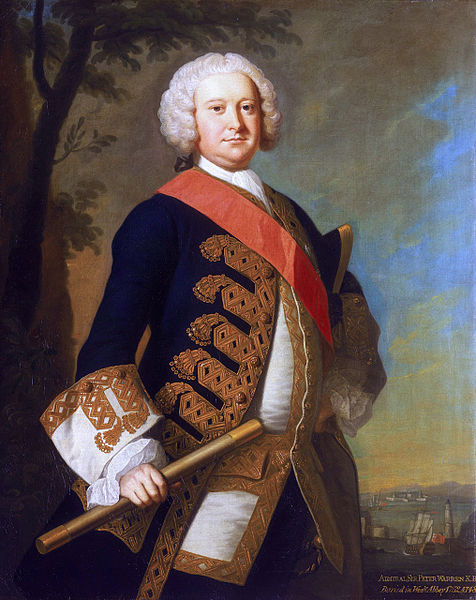
Admiral Si Peter Warren
Portrait of Sir Peter Warren at National Maritime Museum

For Full Biography of Sir Peter Warren

.

shamrockshamrockshamrockshamrockshamrockshamrockshamrockshamrock

.

1848: Young Ireland Rebellion

Irish Nationalists led by William Smith O’Brien and Thomas Francis Meagher engage in a half-baked disastrous “rebellion” at Ballingarry . A small group of Young Irelanders engaged in a short sharp exchange of gunfire with members of the local constabulary.

When the police were reinforced the Young Ireland rebels retreated. Although not much more than a riot in one sense, the rebels became heroes particularly following their deportation to Van Diemen’s Land.

Although, they can fairly be described as clueless during this escapade, a number proved themselves to be extremely competent soldiers and statesmen including Meagher who fought as a Union General and was later appointed Acting Governor of Montana

READ: Short history of Young Ireland Rebellion

.

shamrockshamrockshamrockshamrockshamrockshamrockshamrockshamrock

.

1945: JFK Speaks About De Valera

Fascinating article published by John F. Kennedy for Hearst Newspaper group about Ireland Seething Again Over Partition. Kennedy’s comments about “the brilliant, austere De Valera” are particularly astute who is still “fighting politically the same relentless battle, that was fought in the field during the uprising of 1916, in the war of independence and later in the civil war.”

Kennedy is not always given credit for his writing abilities, (with most of credit for speech writing given rightly to his Counselor Ted Sorenson), but some elements of this article are lyrical.

Commenting on De Valera’s debate elaboration, “he left the situation to many observers as misty as this island on an early winter’s morning. ” And on De Valera’s Fianna Fail colleagues: “All have been in both England and Ireland prisons, and many have wounds which still ache when the cold winds come in from the west.”

For original draft of article at JFK Library

When visiting Ireland in 1963, Kennedy made humorous reference to the respective birth places of the Kennedy and De Valera clan.

Image of JFK in For the Love of Being Irish: An A-Z of Ireland via History, Humor and Verse.

JFK image in For the Love of Being Irish

Buy Author Signed Copy of For the Love of Being Irish: An A-Z of Ireland.

.

shamrockshamrockshamrockshamrockshamrockshamrockshamrockshamrock

.

1975: Tom Dunphy of The Royal Showband / Big 8

Death of Irish showband legend Tom Dunphy in a car crash while on the way to perform with Brendan Bowyer and the Big 8 at Mary from Dungloe Festival. Dunphy was one of the first superstars of the Irish music scene.

.

shamrockshamrockshamrockshamrockshamrockshamrockshamrockshamrock

.

WATCH: A Short History of Ireland

Want to learn more about Ireland? See these images and more in the acclaimed For the Love of Being Irish

Irish gift ideas. Best selling Irish booksRonnie Drew and Luke Kelly - Musical Irish Gifts to the worldJoyce Image in For the Love of Being IrishMichael Collins: Image from For the Love of Being Irish

___________________________________

This history is written by Irish author, business keynote speaker and award winning humorist IrishmanSpeaks – Conor Cunneen. If you spot any inaccuracies or wish to make a comment, please don’t hesitate to contact us via the comment button.

Visit Conor’s YouTube channel IrishmanSpeaks to Laugh and Learn.

Tags: Best Irish Gift, Creative Irish Gift, Unique Irish Gifts, Irish Books, Irish Authors, Today in Irish History TODAY IN IRISH HISTORY (published by IrishmanSpeaks)


July 21,

Irish Brigade at Bull Run – Bloody Friday 1972 – Ambassador Christopher Ewart Biggs

July 21: TODAY in Irish History:

** ** **

Brigadier Michael Corcoran 69th_New_York_Militia
Sligo Born Brigadier Michael Corcoran on left with 69th_New_York_Militia

Snippets of Irish History by Conor Cunneen IrishmanSpeaks 

Conor is a Chicago based Motivational Humorous Business Speaker, Author and History buff.

***********************

***********************

NEW                    NEW

Product Details

SHEIFGAB! Staying Sane, Motivated and Productive in Job Search.

An insightful, realistic, yet humorous book on the job search process by Today in Irish History Curator Conor Cunneen

Special accessible price for job seekers on Kindle of $2.99

.

shamrockshamrockshamrockshamrockshamrockshamrockshamrockshamrock

.

1858: Chauncey Olcott – My Wild Irish Rose Composer

Chauncey Olcott

Stage actor, songwriter and singer Chancellor “Chauncey” Olcott is born in Buffalo, New York to parents of Irish extraction. In collaboration with Ernest Ball, he  would write lyrics for numerous “Irish” songs include My Wild Irish Rose and When Irish Eyes are Smiling. He is a member of the Songwriters Hall of Fame.

.

shamrockshamrockshamrockshamrockshamrockshamrockshamrockshamrock

.

1861: Irish Brigade at Bull Run

The Irish Brigade fights at the First Battle of Bull Run under Generall Michael Corcoran from County Sligo. Corcoran was wounded and captured by the Confederate forces, but released some time later.

Brigadier Michael Corcoran 69th_New_York_Militia

Sligo Born Brigadier Michael Corcoran on left with 69th_New_York_Militia

.

READ: IRISH BRIGADE AT FIRST BATTLE OF BULL RUN

.

In his memoirs, William Tecumsah Sherman writes of Corcoran at Bull Run:

“Colonel Corcoran, who, in his turn, led his regiment over the crest; and had in full, open view the ground so severely contested; the fire was very severe, and the roar of cannon, musketry, and rifles, incessant; it was manifest the enemy was here in great force, far superior to us at that point. The Sixty-ninth held the ground for some time, but finally fell back in disorder…………

I directed Colonel Corcoran to move along the ridge to the rear, near the position where we had first formed the brigade. General McDowell was there in person, and need all possible efforts to reassure the men. By the active exertions of Colonel Corcoran, we formed an irregular square against the cavalry which were then seen to issue from the position from which we had been driven, and we began our retreat toward the same ford of Bull Run by which we had approached the field of battle………….

Corcoran and I formed the brigade into an irregular square, but it fell to pieces; and, along with a crowd, disorganized but not much scared, the brigade got back to Centreville to our former camps. Corcoran was captured, and held a prisoner for some time.”

Colonel Michael Corcoran

Colonel Michael Corcoran

Some days after the battle, President Lincoln spoke to the troops. Sherman writes the troops gathered about “about Mr. Lincoln, who would speak to them. He made to them the same feeling address, with more personal allusions, because of their special gallantry in the battle under Corcoran, who was still a prisoner in the hands of the enemy.”

.

shamrockshamrockshamrockshamrockshamrockshamrockshamrockshamrock

.

1919: House of Commons Debate on Ireland

lloyd george

Prime Minister Lloyd George

Fascinating debate in House of Commons on Ireland. Lloyd George outlines the issues as he sees them. (Source: Hansard)

“My hon. Friend appealed to the Government to apply the principles of President Wilson to the case of Ireland, and he asked me a question, whether I was prepared to do so? I will answer that question if he will answer me another, and I am not asking him that question, let him believe me, merely to get out of answering his question, but because it will help me to answer it. Will he apply those principles to the whole of Ireland? Because as he himself realises—no one knows better—that is the supreme obstacle in the way of settlement lie talked about forcing authority upon a free people by arms. In principle it is the same thing whether you force 1,500,000 of people or 3,000,000 of people. It is the same principle, and he must know that that is the difficulty.

The real difficulty is that you cannot, if he will allow me to say so, get his countrymen to face the facts. They are not satisfied with getting self-determination for themselves without depriving others of the right of self-determination. I tried to apply the principles of President Wilson to Ireland. [An HON. MEMBER: “Ah.”] Oh, I did. I tried the principle of self-determination. It was suggested to me that a Convention of Irishmen should be summoned. I thought it was a very good idea. I said, “We have all failed. Every party has failed. Every Government has failed. We have tried one expedient after another, and for some reason or other they have always come to nought.” I said, “Clearly we do not understand them. Let them settle it themselves.”

So a Convention was summoned upon lines suggested before it was summoned. 1 consulted the Nationalist Leader as to who should be summoned. He was perfectly satisfied with the composition of the Convention. Here was an opportunity for Ireland to determine its own fate. What happened? Two parties 1052 refused absolutely to come near the place. One of them, the party represented by the late Member for Cork, had a very considerable following in Ireland. The other party was that one which not merely claimed a majority, but at the last election demonstrated it by an overwhelming majority. They would not come near the place. What happened to the rest? The Nationalists—this is my recollection—were divided into three different sections. The Unionists were divided into three or four. That was my attempt to apply the principles of President Wilson to Ireland.

.

shamrockshamrockshamrockshamrockshamrockshamrockshamrockshamrock

.

1972: Bloody Friday – Devastating IRA Bombing of Belfast

Fourteen year old Glynn Stephen Parker is the youngest of nine people to die as nineteen IRA bombs rip through Belfast in an indiscriminate act of carnage that has become known as Bloody Friday.

Glynn Parker Bloody Friday
Fourteen year old Glynn Parker

Speaking to the House of Commons, William Whitelaw, Secretary of State for Northern Ireland reported ” Seven civilians and two soldiers were killed and at least 130 civilians injured-many gravely. I hardly need point out that all sections of the community are indiscriminately affected by these outrages. Of the dead two were Roman Catholics. Of the 130 injured at least 40 were Roman Catholics. 53 were men and boys, 77 women and children.”

.

BBC DOCUMENTARY on BLOODY FRIDAY

A Mirror Group newspaper stated “Complete carnage. A fireman with a shovel, shoveling up what was left of a woman shopper.”

The Provisional IRA claimed that the Samaritans, the Public Protection Agency and the press “were informed of bomb positions at least 30 minutes to one hour before each explosion”. While some warnings were received, with more than twenty bombs planted, many people simply ran from one explosion into another one.

In 2002, the IRA issued a statement apologizing for the bombing, something that was received with extraordinary equanimity by Colin Parry, whose son was killed by the IRA, said: “In truth it offers no comfort. My hurt is absolute and my loss is absolute and no word from the IRA can mitigate for the loss of my son. “That said, I am as active in the peace process as a private individual can be, and from that perspective I appreciate what they are doing.”

VIEW UTV REPORT ON BLOODY FRIDAY

.

shamrockshamrockshamrockshamrockshamrockshamrockshamrockshamrock

.

1976: Christopher Ewart-Biggs Assassination

British ambassador to Ireland  Christopher Ewart-Biggs is assassinated by the IRA when his car hits a landmine outside of Dublin. No one was ever convicted of the offense.

.

Interview with Brian O’Driscoll, driver for Christopher Ewart-Biggs

shamrockshamrockshamrockshamrockshamrockshamrockshamrockshamrock

.

WATCH: A Short History of Ireland

Want to learn more about Ireland? See these images and more in the acclaimed For the Love of Being Irish

Irish gift ideas. Best selling Irish booksRonnie Drew and Luke Kelly - Musical Irish Gifts to the worldJoyce Image in For the Love of Being IrishMichael Collins: Image from For the Love of Being Irish

___________________________________

This history is written by Irish author, business keynote speaker and award winning humorist IrishmanSpeaks – Conor Cunneen. If you spot any inaccuracies or wish to make a comment, please don’t hesitate to contact us via the comment button.

Visit Conor’s YouTube channel IrishmanSpeaks to Laugh and Learn.

Tags: Best Irish Gift, Creative Irish Gift, Unique Irish Gifts, Irish Books, Irish Authors, Today in Irish History TODAY IN IRISH HISTORY (published by IrishmanSpeaks)