Posts tagged ‘irish war of independence’

August 30,

Eurovision Song Contest Winner Dana – De Valera Rebukes Lloyd George

August 30: TODAY in Irish History:

** ** **

Dana - Eurovision Song Contest winner 1970

Dana – Eurovision Song Contest winner 1970

Snippets of Irish History by Conor Cunneen IrishmanSpeaks 

Conor is a Chicago based Motivational Humorous Business Speaker, Author and History buff.

***********************

***********************

NEW                    NEW

Product Details

SHEIFGAB! Staying Sane, Motivated and Productive in Job Search.

An insightful, realistic, yet humorous book on the job search process by Today in Irish History Curator Conor Cunneen

Special accessible price for job seekers on Kindle of $2.99

.

shamrockshamrockshamrockshamrockshamrockshamrockshamrockshamrock

.

1921: Sectarian Rioting in Belfast

Vicious sectarian rioting breaks out in Belfast resulting in the deaths of at least 9 people.  Throughout the year, Catholic and Protestant communities baited and attacked each other. July was a particularly violent month. Sectarian violence was an unfortunate part of working class Belfast culture as evidenced by the riots in 1886

.

shamrockshamrockshamrockshamrockshamrockshamrockshamrockshamrock

.

1921: De Valera Sends Stinging Rebuke to Lloyd George

De Valera sends another stinging rebuke to Lloyd George as the parties edge closer to negotiations. He was responding to a communication from Lloyd George where the wily old Welshman invoked Abraham Lincoln’s first inaugural address:

“I cannot better express the British standpoint in this respect than in words used of the Northern and Southern States by Abraham Lincoln in the First Inaugural Address. They were spoken by him on the brink of the American Civil War, which he was striving to avert:—

Physically speaking he said we cannot separate. We cannot remove our respective sections from each other, nor build an impassible wall between them. . . . It is impossible, then, to make that intercourse more advantageous or more satisfactory after separation than before. . . . Suppose you go to war, you cannot fight always; and when, after much loss on both sides and no gain on either, you cease fighting, the identical old questions as to terms of intercourse are again upon you.

I do not think it can be reasonably contended that the relations of Great Britain and Ireland are in any different case.”

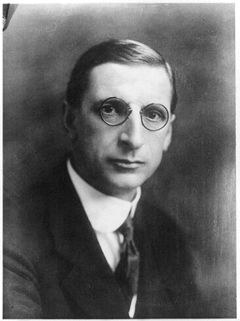
Eamonn De Valera 1921 today in Irish history
Eamonn De Valera 1921

.

“Dev” saw things somewhat differently:

“The people of Ireland, acknowledging no voluntary union with Great Britain and claiming as a fundamental natural right to choose freely for themselves the path they shall take to realise their national destiny, have by an overwhelming majority declared for independence, set up a Republic, and more than once confirmed their choice.

Great Britain, on the other hand, acts as though Ireland were bound to her by a contract of union that forbade separation. The circumstances of the supposed contract are notorious, yet on the theory of its validity the British Government and Parliament claim to rule and legislate for Ireland, even to the point of partitioning Irish territory against the will of the Irish people, and killing or casting into prison every Irish citizen who refuses allegiance.

Force will not solve the problem. It will never secure the ultimate victory over reason and right. If you again resort to force, and if victory be not on the side of justice, the problem that confronts us will confront our successors. The fact that for 750 years this problem has resisted a solution by force is evidence and warning sufficient. It is true wisdom, therefore, and true statesmanship, not any false idealism, that prompts me and my colleagues. Threats of force must be set aside. They must be set aside from the beginning, as well as during the actual conduct of the negotiations. The respective plenipotentiaries must meet untrammelled by any conditions save the facts themselves, and must be prepared to reconcile their subsequent differences not by appeals to force, covert or open, but by reference to some guiding principle on which there is common agreement. We have proposed the principle of government by consent of the governed, and do not mean it as a mere phrase.”

SEE Official Correspondence relating to the Peace Negotiations.

.

shamrockshamrockshamrockshamrockshamrockshamrockshamrockshamrock

.

1951: Eurovision Song Contest Winner Dana

Singer Dana is born Rosemary Scallon is born in London. Her family returned to Derry when she was five. Dana became an overnight celebrity when she won the Eurovision song contest for Ireland singing All Kinds of Everything composed Derry Lindsay and Jackie Smith and the country went mad for a young lass who charmed every mother in Ireland and many a young lad with her gentle manner. Dana went on to have a relatively successful musical career.

.

.

In 1997, Dana ran unsuccessfully in the Irish presidential election and also 2011. She was MEP for Connacht–Ulster 1999-2004.

Dana today in irish history
Presidential candidate Dana 2011

 .

.

shamrockshamrockshamrockshamrockshamrockshamrockshamrockshamrock

.

WATCH: A Short History of Ireland

Want to learn more about Ireland? See these images and more in the acclaimed For the Love of Being Irish

Irish gift ideas. Best selling Irish booksRonnie Drew and Luke Kelly - Musical Irish Gifts to the worldJoyce Image in For the Love of Being IrishMichael Collins: Image from For the Love of Being Irish

___________________________________

This history is written by Irish author, business keynote speaker and award winning humorist IrishmanSpeaks – Conor Cunneen. If you spot any inaccuracies or wish to make a comment, please don’t hesitate to contact us via the comment button.

Visit Conor’s YouTube channel IrishmanSpeaks to Laugh and Learn.

Tags: Best Irish Gift, Creative Irish Gift, Unique Irish Gifts, Irish Books, Irish Authors, Today in Irish History TODAY IN IRISH HISTORY (published by IrishmanSpeaks)


August 24,

De Valera’s Superb Response to Lloyd George – United Irishman Napper Tandy

August 24: TODAY in Irish History:

** ** **

Eamon_de_Valera

Eamon de Valera

Snippets of Irish History by Conor Cunneen IrishmanSpeaks 

Conor is a Chicago based Motivational Humorous Business Speaker, Author and History buff.

***********************

***********************

NEW                    NEW

Product Details

SHEIFGAB! Staying Sane, Motivated and Productive in Job Search.

An insightful, realistic, yet humorous book on the job search process by Today in Irish History Curator Conor Cunneen

Special accessible price for job seekers on Kindle of $2.99

.

shamrockshamrockshamrockshamrockshamrockshamrockshamrockshamrock

.

1803: Death of Irish revolutionary and United Irishman advocate Napper Tandy (b.1740).

Tandy joined with a French contigent in a half baked effort to invade Ireland in 1798. The ragged group landed off the coast of Donegal for a short period before departing for Norway. Attempting to get back to France, he was arrested at Hamburg and ultimately delivered to the British authorities. He was tried in Dublin for complicity in the Insurrection of 1798, but was acquitted on a point of law. He was then sent to Lifford, and on 7th April 1801 was arraigned for his part in the attempted invasion. He pleaded guilty, and was sentenced to death. His life was saved through the intercession of Lord Cornwallis who said  “considering the incapacity of this old man to do further mischief, the mode by which he came into our hands, his long subsequent confinement, and, lastly, the streams of blood which have flowed in this island for these last three years.”

His life was spared and he was forced into exile to France where he died in Bordeaux.

Tandy is a relatively minor figure in Irish politics, but his name lives on in Irish folklore mainly thanks to being mentioned in the song The Wearing of the Green.

O Paddy dear, and did ye hear the news that’s goin’ round?

The shamrock is by law forbid to grow on Irish ground!

No more Saint Patrick’s Day we’ll keep, his color can’t be seen

For there’s a cruel law ag’in the Wearin’ o’ the Green.”

I met with Napper Tandy, and he took me by the hand

And he said, “How’s poor old Ireland, and how does she stand?”

“She’s the most distressful country that ever yet was seen

For they’re hanging men and women there for the Wearin’ o’ the Green.”.

.

JOHN MCCORMACK singing THE WEARING OF THE GREEN

.

shamrockshamrockshamrockshamrockshamrockshamrockshamrockshamrock

.

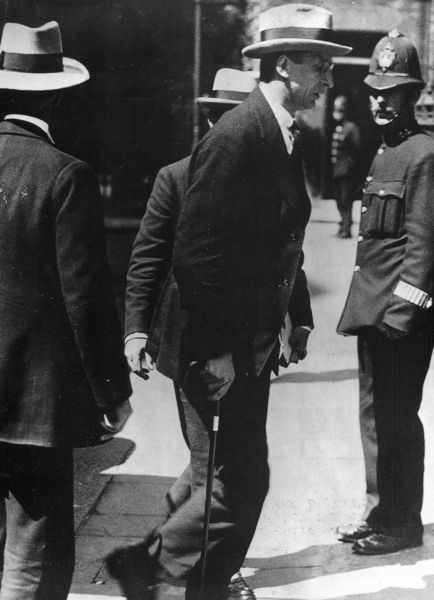
1921: De Valera Responds to Lloyd George

Ongoing correspondence between Lloyd George and Eamonn De Valera to bring a halt to the War of Independence sees De Valera write a powerful response to Lloyd George. The official letter was dictated and sent in Irish. The following is the official translation at www.difp.ie

.

Eamonn De Valera entering Downing Street

.

Sir,

The anticipatory judgement I gave in my reply of August 10th has been confirmed.2 I laid the proposals of your Government before Dáil Eireann, and, by an unanimous vote, it has rejected them.3

From your letter of August 13th it was clear that the principle we were asked to accept was that the ‘geographical propinquity’ of Ireland to Britain imposed the condition of subordination of Ireland’s right to Britain’s strategic interests as she conceives them, and that the very length and persistence of the efforts made in the past to compel Ireland’s acquiescence in a foreign domination imposed the condition of acceptance of that domination now.

I cannot believe that your Government intend to commit itself to a principle of sheer militarism destructive of international morality and fatal to the world’s peace. If a small nation’s right to independence is forfeit when a more powerful neighbour covets its territory for the military or other advantages it is supposed to confer, there is an end to liberty. No longer can any small nation claim a right to a separate sovereign existence. Holland and Denmark can be made subservient to Germany, Belgium to Germany or to France, Portugal to Spain. If nations that have been forcibly annexed to empires lose thereby their title to independence, there can be for them no rebirth to freedom. In Ireland’s case, to speak of her seceding from a partnership she has not accepted, or from allegiance which she has not undertaken to render, is fundamentally false, just as the claim to subordinate her independence to British strategy is fundamentally unjust. To neither can we, as the representatives of the Nation, lend countenance.

If our refusal to betray our nation’s honour and the trust that has been reposed in us is to be made an issue of war by Great Britain, we regret it. We are as conscious of our responsibilities to the living as we are mindful of principle or of our obligations to the heroic dead. We have not sought war, nor do we seek war, but if war be made upon us we must defend ourselves and shall do so, confident that whether our defence be successful or unsuccessful no body or representative Irishmen or Irishwomen will ever propose to the nation the surrender of its birthright.

We long to end the conflict between Britain and Ireland. If your Government be determined to impose its will upon us by force and, antecedent to negotiation, to insist upon conditions that involve a surrender of our whole national position and make negotiation a mockery, the responsibility for the continuance of the conflict rests upon you.

On the basis of the broad guiding principle of government by the consent of the governed, peace can be secured,  a peace that will be just and honourable to all, and fruitful of concord and enduring amity. To negotiate such a peace, Dáil Eireann is ready to appoint its representatives, and, if your Government accepts the principle proposed, to invest them with plenary powers to meet and arrange with you for its application in detail.

I am, Sir,

Faithfully yours,

Eamon de Valera

.

.

shamrockshamrockshamrockshamrockshamrockshamrockshamrockshamrock

.

WATCH: A Short History of Ireland

Want to learn more about Ireland? See these images and more in the acclaimed For the Love of Being Irish

Irish gift ideas. Best selling Irish booksRonnie Drew and Luke Kelly - Musical Irish Gifts to the worldJoyce Image in For the Love of Being IrishMichael Collins: Image from For the Love of Being Irish

___________________________________

This history is written by Irish author, business keynote speaker and award winning humorist IrishmanSpeaks – Conor Cunneen. If you spot any inaccuracies or wish to make a comment, please don’t hesitate to contact us via the comment button.

Visit Conor’s YouTube channel IrishmanSpeaks to Laugh and Learn.

Tags: Best Irish Gift, Creative Irish Gift, Unique Irish Gifts, Irish Books, Irish Authors, Today in Irish History TODAY IN IRISH HISTORY (published by IrishmanSpeaks)