Posts tagged ‘irish writers’

April 27,

The Irony of the 1916 Rising – Ulysses S. Grant – Cecil Day-Lewis at Today in Irish History

April 27: TODAY in Irish History:

** ** **

1916 GPO

Dublin GPO after Rising

Snippets of Irish History by Conor Cunneen IrishmanSpeaks 

Conor is a Chicago based Motivational Humorous Business Speaker, Author and History buff.

.
shamrockshamrockshamrockshamrockshamrockshamrockshamrockshamrock

.

1916: Easter Rising Dublin – Day 4: As British authorities get to grips with the situation in Dublin, fierce street to street fighting takes place in parts of Dublin. James Connolly is severely wounded while involved in an action close to the GPO. He manages to crawl back to the rebel conclave which is now completely cut off from other rebels. Learning from the debacle at Mount Street bridge, British troops did not attempt a full scale assault on the GPO>

British troops finally take Mount Street bridge at the cost of over two hundred casualties incurred by seventeen Irish rebels, five of whom were killed.
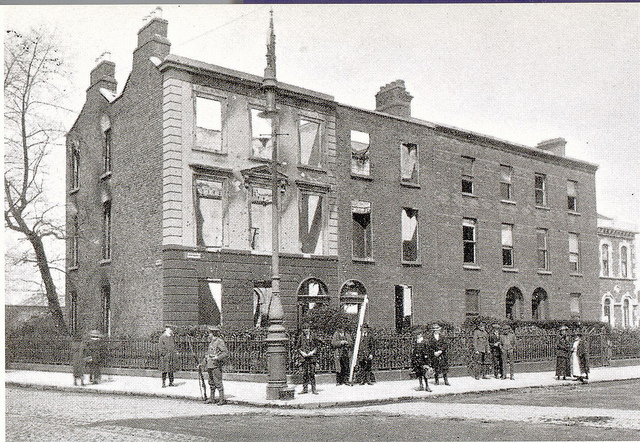
Mount street bridge 1916 following Rising
Witness James Stephens wrote of Thursday’s events: “At 11.30am there came the sound of heavy guns firing in the direction of Sackville Street. I went on the roof, and remained there for some time. From this height the sounds could be heard plainly. There was sustained firing along the whole central line of the City, from the Green down to Trinity College, and from thence to Sackville Street, and the report of the various types of arm could be easily distinguished. There were rifles, machine guns and very heavy cannon.”

.

SHORT VIDEO ON IRISH REBEL WEAPONRY

.

Easter Rising: British Authorities Blundered and Media Reaction

While the execution of rebel leaders some days after the Rising was a “legitimate” response to “traitors” at a time Britain was involved in a war, the executions proved to be probably THE  greatest single mistake Britain made in its time in Ireland. The rebellion was not initially popular and the destruction of Dublin brought odium on the rebels from Irish media including the Irish Independent which wrote:

“No terms of denunciation that pen could indict would be too strong to apply to those responsible for the insane and criminal rising of last week. Around us in the centre of Ireland’s capital, is a scene of ruin which it is heartrending to behold. Some of the proudest structures in what was one of the finest streets in Europe are now reduced to shapeless heaps of smouldering ashes.”

The Irony of 1916. 

At a time Irish rebels were fighting and dying to overthrow British rule in Ireland, hundreds of Irish soldiers were fighting and dying with the British army at the Battle of Hulluch when German troops unleashed one of the most devastating chlorine gas attacks of World War I. Irish nationalist leader John Redmond had encouraged participation in the British army in 1914 in the belief that it would guarantee Home Rule for Ireland and of course everyone “knew” the war would be short lived. Over 1,ooo soldiers of the 16th “Irish division” suffered dreadful death and injury from the Hulluch gas attack April 27-29.

In an example of revisionist history that would have done Stalin proud, Irish authorities ignored the thousands of Irish men who fought and died in World War I until very recently.

.

shamrockshamrockshamrockshamrockshamrockshamrockshamrockshamrock

.

Other Events on this Day in Irish History

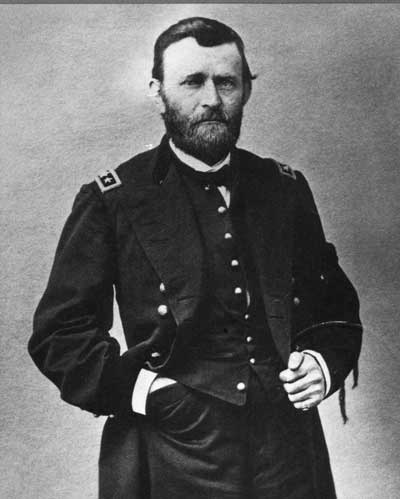
1822: Ulysses S. Grant, 18th President of the United States is born Hiram Ulysses Grant to a mother of Scots-Irish ancestry in Point Pleasant, Ohio. His maternal grandfather John Simpson, was born in County Tyrone, and immigrated to America in 1760. Grant visited Ireland in 1879.

.
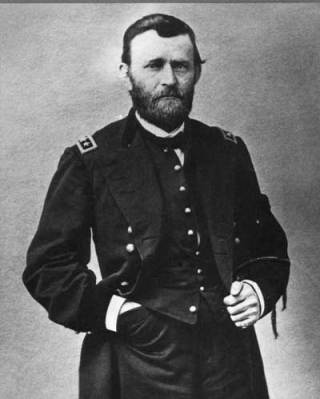
Ulysses S. Grant 1822-1885

.

shamrockshamrockshamrockshamrockshamrockshamrockshamrockshamrock

.

1880: A Royal Charter is issued creating The Royal University of Ireland an examining and degree-awarding university based on the model of the University of London.

.

shamrockshamrockshamrockshamrockshamrockshamrockshamrockshamrock

.

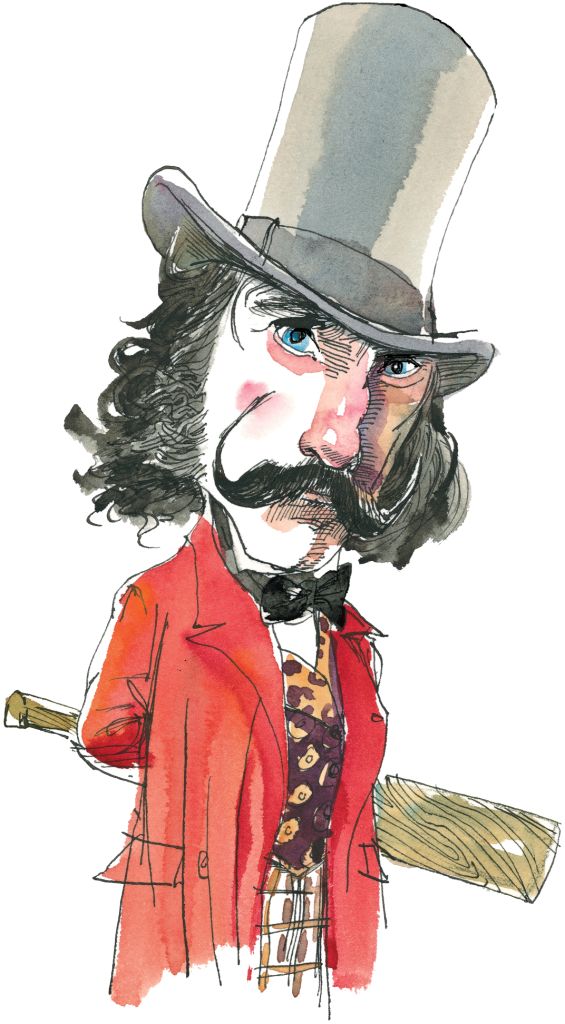
1904: Cecil Day-Lewis

Poet Cecil Day-Lewis is born in Stradbally, Co. Laois. He is the father of Daniel Day-Lewis and was Poet Laureate from 1968-1972. Below is illustration of son Daniel in For the Love of Being Irish

.
.

shamrockshamrockshamrockshamrockshamrockshamrockshamrockshamrock

.

Want to learn more about Ireland? See these images and more in the acclaimed For the Love of Being Irish

Irish gift ideas. Best selling Irish booksRonnie Drew and Luke Kelly - Musical Irish Gifts to the worldJoyce Image in For the Love of Being IrishMichael Collins: Image from For the Love of Being Irish

___________________________________

This history is written by Irish author, business keynote speaker and award winning humorist IrishmanSpeaks – Conor Cunneen. If you spot any inaccuracies or wish to make a comment, please don’t hesitate to contact us via the comment button.

Visit Conor’s YouTube channel IrishmanSpeaks to Laugh and Learn.

Tags: Best Irish Gift, Creative Irish Gift, Unique Irish Gifts, Irish Books, Irish Authors, Today in Irish History TODAY IN IRISH HISTORY (published by IrishmanSpeaks)


April 20,

Dracula Author Bram Stoker – Seán Ó Faoláin – Bushmills Distillery at Today in Irish History

April 20: TODAY in Irish History:

** ** **

Bram Stoker

Snippets of Irish History by Conor Cunneen IrishmanSpeaks

Conor is a Chicago based Motivational Humorous Business Speaker, Author and History buff.

.

shamrockshamrockshamrockshamrockshamrockshamrockshamrockshamrock

.

1608: Ireland’s First (Official) Distillery

King James I grants Sir Thomas Phillips a royal licence to distil ‘uisce beatha’ (whiskey.) in ‘the territory of the Rowte’ in Co. Antrim. The literal translation of uisce beatha is ‘water of life’. This is the first official recorded evidence of whiskey-making in the area that would become home to Bushmills.

Bushmills holds the oldest license for whiskey distillation in the world. Bushmills is the second biggest selling Irish Whiskey in the world.

.

READ: About Bushmills at Whiskey Pages

.

shamrockshamrockshamrockshamrockshamrockshamrockshamrockshamrock

.

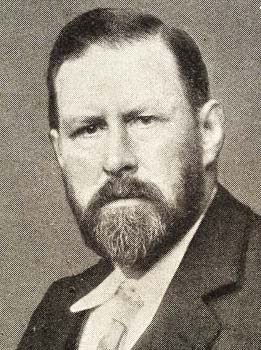
1912: Bram Stoker 1847-1912

Death of novelist Bram Stoker (b. 1847), author of Dracula which was first published in 1897. Born in Dublin, Stoker was bed-ridden for much of his childhood, but lived a relatively healthy life during his adulthood. Educated at Trinity College, he moved to London in 1878 and married actress Florence Balcombe. Dracula received some praise on its publication. (Sir Arthur Conan Doyle praised it highly) but it was not until the movie Dracula, starring Bela Lugosi opened in 1931 that vampire mania really took off.

Bran Stoker 1847-1912

.

https://todayinirishhistory.com/wp-content/uploads/2013/04/0fb50-2012-ireland-bram-stoker-100th-anniversary-of-death-postage-stamps.jpg

In 2012, An Post (Irish Post Office) issued stamps commemorating Bram Stoker

.

shamrockshamrockshamrockshamrockshamrockshamrockshamrockshamrock

.

1916:Double Congressional Medal of Honor Winner

Clare-born Henry Hogan, one of only nineteen people to win TWO Congressional Medals of Honor dies age 76.

He was cited for gallantry in 1876 against Sitting Bull’s Lakota warriors at the 1876 Battle of Cedar Creek, and in 1877 for action at Bear Paw Mountain, Montana in a further action in the “Indian Wars.” His second citation reads: 30 September 1877. Citation: Carried Lt. Romeyn, who was severely wounded, off the field of battle under heavy fire.

Another double recipients was also Irish John Cooper for gallantry during the Civil War. Coopers citations read:

“On board the U.S.S. Brooklyn during action against rebel forts and gunboats and with the ram Tennessee, in Mobile Bay, 5 August 1864. Despite severe damage to his ship and the loss of several men on board as enemy fire raked her decks from stem to stern, Cooper fought his gun with skill and courage throughout the furious battle which resulted in the surrender of the prize rebel ram Tennessee and in the damaging and destruction of batteries at Fort Morgan. SECOND AWARD Served as quartermaster on Acting Rear Admiral Thatcher’s staff. During the terrific fire at Mobile, on 26 April 1865, at the risk of being blown to pieces by exploding shells, Cooper advanced through the burning locality, rescued a wounded man from certain death, and bore him on his back to a place of safety. G.O. No.: 62, 29 June 1865.”

.

shamrockshamrockshamrockshamrockshamrockshamrockshamrockshamrock

.

1954: Ireland’s Last Execution

Twenty-five year old Michael Manning from Limerick is the last person to be executed in the Republic of Ireland, for the murder of a 65 year old nurse.  The execution by hanging was carried out in Mountjoy Prison, Dublin by the famous English hangman Albert Pierrepoint who travelled from London for the event. Coincidentally, the first execution Pierrepoint attended was also in Mountjoy in 1932 where he watched his uncle execute a man for murder.

Albert Pierrepoint executioner
Behind that smiling face! Hangman Albert Pierrepoint

.

shamrockshamrockshamrockshamrockshamrockshamrockshamrockshamrock

.

1991: Death of novelist and short story writer Seán Ó Faoláin.

Seán Ó Faoláin

Seán Ó Faoláin

Irish short story writer Seán Ó Faoláinwas born John Francis Whelan in Cork. In the 1950’s, he served as director of the Arts Council of Ireland. He made a major contribution to the development of Irish literature when he founded the literary periodical The Bell. This publication created quite a bit of controversy as it was outspoken in its attacks on censorship and conservative aspects of Irish nationalism and Catholicism.

.

READ: More about at Irish Writers Online

.

READ: Article on Seán Ó Faoláin at Cork Independent

.

.

shamrockshamrockshamrockshamrockshamrockshamrockshamrockshamrock

.

Want to learn more about Ireland? See these images and more in the acclaimed For the Love of Being Irish

Irish gift ideas. Best selling Irish booksRonnie Drew and Luke Kelly - Musical Irish Gifts to the worldJoyce Image in For the Love of Being IrishMichael Collins: Image from For the Love of Being Irish

___________________________________

This history is written by Irish author, business keynote speaker and award winning humorist IrishmanSpeaks – Conor Cunneen. If you spot any inaccuracies or wish to make a comment, please don’t hesitate to contact us via the comment button.

Visit Conor’s YouTube channel IrishmanSpeaks to Laugh and Learn.

Tags: Best Irish Gift, Creative Irish Gift, Unique Irish Gifts, Irish Books, Irish Authors, Today in Irish History TODAY IN IRISH HISTORY (published by IrishmanSpeaks)