Posts tagged ‘united Irishmen’

August 24,

De Valera’s Superb Response to Lloyd George – United Irishman Napper Tandy

August 24: TODAY in Irish History:

** ** **
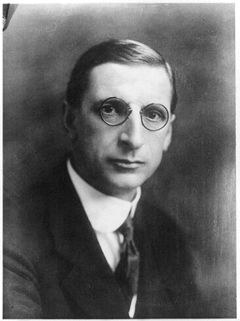
Eamon_de_Valera

Eamon de Valera

Snippets of Irish History by Conor Cunneen IrishmanSpeaks 

Conor is a Chicago based Motivational Humorous Business Speaker, Author and History buff.

***********************

***********************

NEW                    NEW

Product Details

SHEIFGAB! Staying Sane, Motivated and Productive in Job Search.

An insightful, realistic, yet humorous book on the job search process by Today in Irish History Curator Conor Cunneen

Special accessible price for job seekers on Kindle of $2.99

.

shamrockshamrockshamrockshamrockshamrockshamrockshamrockshamrock

.

1803: Death of Irish revolutionary and United Irishman advocate Napper Tandy (b.1740).

Tandy joined with a French contigent in a half baked effort to invade Ireland in 1798. The ragged group landed off the coast of Donegal for a short period before departing for Norway. Attempting to get back to France, he was arrested at Hamburg and ultimately delivered to the British authorities. He was tried in Dublin for complicity in the Insurrection of 1798, but was acquitted on a point of law. He was then sent to Lifford, and on 7th April 1801 was arraigned for his part in the attempted invasion. He pleaded guilty, and was sentenced to death. His life was saved through the intercession of Lord Cornwallis who said  “considering the incapacity of this old man to do further mischief, the mode by which he came into our hands, his long subsequent confinement, and, lastly, the streams of blood which have flowed in this island for these last three years.”

His life was spared and he was forced into exile to France where he died in Bordeaux.

Tandy is a relatively minor figure in Irish politics, but his name lives on in Irish folklore mainly thanks to being mentioned in the song The Wearing of the Green.

O Paddy dear, and did ye hear the news that’s goin’ round?

The shamrock is by law forbid to grow on Irish ground!

No more Saint Patrick’s Day we’ll keep, his color can’t be seen

For there’s a cruel law ag’in the Wearin’ o’ the Green.”

I met with Napper Tandy, and he took me by the hand

And he said, “How’s poor old Ireland, and how does she stand?”

“She’s the most distressful country that ever yet was seen

For they’re hanging men and women there for the Wearin’ o’ the Green.”.

.

JOHN MCCORMACK singing THE WEARING OF THE GREEN

.

shamrockshamrockshamrockshamrockshamrockshamrockshamrockshamrock

.

1921: De Valera Responds to Lloyd George

Ongoing correspondence between Lloyd George and Eamonn De Valera to bring a halt to the War of Independence sees De Valera write a powerful response to Lloyd George. The official letter was dictated and sent in Irish. The following is the official translation at www.difp.ie

.
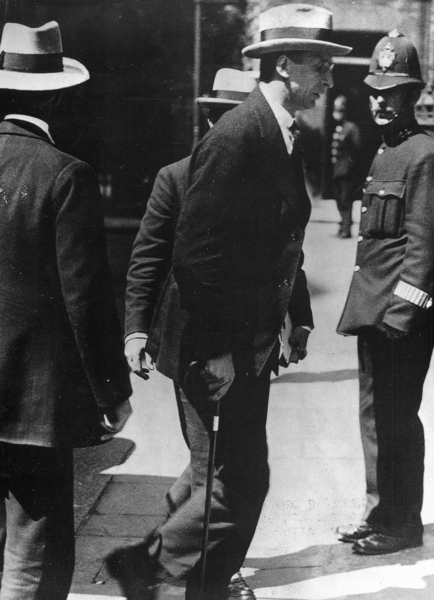
Eamonn De Valera entering Downing Street
.

Sir,

The anticipatory judgement I gave in my reply of August 10th has been confirmed.2 I laid the proposals of your Government before Dáil Eireann, and, by an unanimous vote, it has rejected them.3

From your letter of August 13th it was clear that the principle we were asked to accept was that the ‘geographical propinquity’ of Ireland to Britain imposed the condition of subordination of Ireland’s right to Britain’s strategic interests as she conceives them, and that the very length and persistence of the efforts made in the past to compel Ireland’s acquiescence in a foreign domination imposed the condition of acceptance of that domination now.

I cannot believe that your Government intend to commit itself to a principle of sheer militarism destructive of international morality and fatal to the world’s peace. If a small nation’s right to independence is forfeit when a more powerful neighbour covets its territory for the military or other advantages it is supposed to confer, there is an end to liberty. No longer can any small nation claim a right to a separate sovereign existence. Holland and Denmark can be made subservient to Germany, Belgium to Germany or to France, Portugal to Spain. If nations that have been forcibly annexed to empires lose thereby their title to independence, there can be for them no rebirth to freedom. In Ireland’s case, to speak of her seceding from a partnership she has not accepted, or from allegiance which she has not undertaken to render, is fundamentally false, just as the claim to subordinate her independence to British strategy is fundamentally unjust. To neither can we, as the representatives of the Nation, lend countenance.

If our refusal to betray our nation’s honour and the trust that has been reposed in us is to be made an issue of war by Great Britain, we regret it. We are as conscious of our responsibilities to the living as we are mindful of principle or of our obligations to the heroic dead. We have not sought war, nor do we seek war, but if war be made upon us we must defend ourselves and shall do so, confident that whether our defence be successful or unsuccessful no body or representative Irishmen or Irishwomen will ever propose to the nation the surrender of its birthright.

We long to end the conflict between Britain and Ireland. If your Government be determined to impose its will upon us by force and, antecedent to negotiation, to insist upon conditions that involve a surrender of our whole national position and make negotiation a mockery, the responsibility for the continuance of the conflict rests upon you.

On the basis of the broad guiding principle of government by the consent of the governed, peace can be secured,  a peace that will be just and honourable to all, and fruitful of concord and enduring amity. To negotiate such a peace, Dáil Eireann is ready to appoint its representatives, and, if your Government accepts the principle proposed, to invest them with plenary powers to meet and arrange with you for its application in detail.

I am, Sir,

Faithfully yours,

Eamon de Valera

.

.

shamrockshamrockshamrockshamrockshamrockshamrockshamrockshamrock

.

WATCH: A Short History of Ireland

Want to learn more about Ireland? See these images and more in the acclaimed For the Love of Being Irish

Irish gift ideas. Best selling Irish booksRonnie Drew and Luke Kelly - Musical Irish Gifts to the worldJoyce Image in For the Love of Being IrishMichael Collins: Image from For the Love of Being Irish

___________________________________

This history is written by Irish author, business keynote speaker and award winning humorist IrishmanSpeaks – Conor Cunneen. If you spot any inaccuracies or wish to make a comment, please don’t hesitate to contact us via the comment button.

Visit Conor’s YouTube channel IrishmanSpeaks to Laugh and Learn.

Tags: Best Irish Gift, Creative Irish Gift, Unique Irish Gifts, Irish Books, Irish Authors, Today in Irish History TODAY IN IRISH HISTORY (published by IrishmanSpeaks)


June 4,

Lord Edward Fitzgerald

Important Figures in Irish History

** ** **

Lord Edward Fizgerald

Lord Edward Fitzgerald

Snippets of Irish History by Conor Cunneen IrishmanSpeaks 

Conor is a Chicago based Motivational Humorous Business Speaker, Author and History buff.

***********************

***********************

NEW                    NEW

Product Details

SHEIFGAB! Staying Sane, Motivated and Productive in Job Search.

An insightful, realistic, yet humorous book on the job search process by Today in Irish History Curator Conor Cunneen

Special accessible price for job seekers on Kindle of $2.99

.

shamrockshamrockshamrockshamrockshamrockshamrockshamrockshamrock

.

Biography of Lord Edward Fitzgerald from The Dictionary of National Biography Vol 19, Sir Sidney Lee

Lord Edward Fitzgerald, Irish patriot, was one of the seventeen children of James Fitzgerald, viscount and first duke of Leinster by Emilia Mary, daughter of Charles, duke of Richmond. His father died in 1773, and his mother married William Ogilvie. The Duke of Richmond lent his house at Aubigny in France to the family, who resided there till 1779; Ogilvie undertook Edward’s education, which had been commenced by a tutor named Lynch.

The boy had a marked military bent, and on returning to England joined the Sussex militia, of which his uncle, the Duke of Richmond, was colonel. He next entered the 96th infantry as lieutenant, served with it in Ireland, exchanged into the 19th in order to get foreign service, and in 1781 went out to Charleston. His skill in covering a retreat got him the post of aide-de-camp to Lord Rawdon, on whose retirement he rejoined his regiment. At the engagement of Eutaw Springs, August 1781, he was wounded in the thigh, was left senseless on the field, and might have succumbed had not a negro, Tony, carried him to his hut and nursed him. Tony was thenceforth, to the end of Fitzgerald’s life, his devoted servant or slave. After his recovery Fitzgerald was on O’Hara’s staff at St. Lucia, but soon returned to Ireland, where his eldest brother had him elected M.P. for Athy.

He voted in the Dublin parliament in the small minority with Grattan and Curran. After a course of professional study at Woolwich a disappointment in love drove him to New Brunswick to join his regiment, the 54th, of which he was now major. Cobbett was the sergeant-major, and was grateful to Fitzgerald for procuring him his discharge, describing him to Pitt in 1800 as the only really honest officer he had ever known. Infected by the fashionable Rousseau admiration for savage life, Fitzgerald made his way by compass through the woods from Frederickton to Quebec, was formally admitted at Detroit into the Bear tribe, and went down the Mississippi to New Orleans, but was refused the expected permission to visit the Mexican mines.

On returning home he found himself M.P. for Kildare, became intimate with the whig leaders in London, joined in April 1792 their Society of the Friends of the People, shared their enthusiasm for the French revolution, and in October 1792 visited Paris. He stayed at the same hotel as Paine, took his meals with him, and at a British dinner to celebrate French victories joined in Sir Robert Smith’s toast to the abolition of all hereditary titles. Cashiered from the army for attendance at this revolutionary banquet, he was not, however, so immersed in politics as to neglect the theatres. Hence his brief courtship and his marriage, 27 December 1792. He took his bride over to Ireland, and six days after his arrival at Dublin caused a scene in parliament by describing the lord-lieutenant and the majority as ‘the worst subjects the king has.’ He was ordered into custody, but refused to make any serious apology.

Lord Edward Fitzgerald

When not attending parliament he enjoyed the society of his wife and child and of his flowers at Kildare. His dismissal from the army and the political reaction consequent on the atrocities in France converted the light-hearted young nobleman into a stern conspirator. Early in 1796 he joined the United Irishmen, who now avowedly aimed at an independent Irish republic, and in May he went with Arthur O’Connor to Bâle to confer with Hoche on a French invasion; but the Directory, apprehensive of accusations of Orleanism, on account of Pamela’s supposed kinship with the Orleans family, declined to negotiate with Fitzgerald, who rejoined his wife at Hamburg, leaving O’Connor to treat with Hoche. Returning to Ireland he visited Belfast with O’Connor, then a candidate for Antrim, but in July 1797 he declined to solicit re-election, telling the Kildare voters that under martial law free elections were impossible, but that he hoped hereafter to represent them in a free parliament.

In the following autumn the United Irishmen became a military organisation, 280,000 men, according to a list given by Fitzgerald to Thomas Reynolds, being prepared with arms, and a military committee, headed by Fitzgerald, was deputed to prepare a scheme of co-operation with the French, or of a rising if their arrival could not be awaited. Fitzgerald was himself colonel of the so-called Kildare regiment, but induced Reynolds to take his place. The latter alleges that three months after his appointment he learned the intention of the conspirators to begin the rising by murdering eighty leading noblemen and dignitaries, and that to save their lives he gave the authorities information which led to the arrest, on 12 March 1798, at Oliver Bond’s house, of the Leinster provincial committee. He does not state whether Fitzgerald was cognisant of the intended murders, but anxious for his escape he had on the 11th given him a vague warning and urged flight, whereupon Fitzgerald expressed a desire to go to France that he might induce Talleyrand to hasten the invasion. Owing perhaps to Reynolds’s warning, Fitzgerald was not at Bond’s meeting; but being told there was no warrant against himself was about to enter his own house, then being searched by the police, when Tony, on the look-out, gave him timely notice.

So far from distrusting Reynolds, Fitzgerald, while in concealment, sent for him on the 14th and 15th, the first time to propose taking refuge in Kilkee Castle, the property of the Duke of Leinster, then occupied by Reynolds. Reynolds objected to the plan as unsafe, and next day took him fifty guineas and a case of pocket pistols. Reynolds clearly gave no information of these interviews, and Lord-chancellor Clare, if not other members of the Irish government, was also desirous of an escape. Fitzgerald, however, remained in or near Dublin, paid two secret visits, once in female attire, to his wife, who had prudently removed from Leinster House, walked along the canal at night, and actively continued preparations for a rising fixed for 23 May. The authorities were therefore obliged in self-defence to take more serious steps for his apprehension, and on 11 May they offered a reward of £1,000.

Madden gives reasons for thinking that the F. H. or J. H. (the first initial was indistinctly written in the original document from which he copied the entry) to whom on 20 June the sum was paid, was John Hughes, a Belfast bookseller, one of Fitzgerald’s so-called body-guard. However this may be, the authorities knew that on the 19th he would be at Murphy’s, a feather dealer. Fitzgerald, having dined, was lying with his coat off on a bed upstairs, and Murphy was asking him to come down to tea, when Major Swan and Ryan mounted the stairs and entered the room. After a desperate struggle, in which Ryan was mortally wounded, Fitzgerald was captured. Shot in the right arm by Major Sirr, who had also entered the room, his wound was pronounced free from danger, whereupon he said, ‘I am sorry for it.’ He was taken first to the castle and then to Newgate. Inflammation set in; his brother Henry and his aunt (Lady Louisa Conolly) were allowed to see him in his last moments, and on 4 June he expired. His remains were interred in St. Werburgh Church, Dublin, and Sirr, forty-three years later, was buried a few paces off in the churchyard. A bill of attainder was passed against Fitzgerald, but the government allowed his Kilrush estate, worth about £700 a year, to be bought by Ogilvie at the price of the mortgage, £10,400, and in 1819 the attainder was repealed. Fitzgerald was of small stature (Reynolds says 5 feet 5 inches, Murphy 5 feet 7 inches), and Moore, who once saw him in 1797, speaks of his peculiar dress, elastic gait, healthy complexion, and the soft expression given to his eyes by long dark eyelashes. He left three children: Edward Fox (1794-1863), an officer in the army; Pamela, wife of General Sir Guy Campbell; and Lucy Louisa, wife of Captain G. F. Lyon, R.N.

.

shamrockshamrockshamrockshamrockshamrockshamrockshamrockshamrock

.

Conor Cunneen on The Irish in the American Civil War

Want to learn more about Ireland? See these images and more in the acclaimed For the Love of Being Irish

Irish gift ideas. Best selling Irish booksRonnie Drew and Luke Kelly - Musical Irish Gifts to the worldJoyce Image in For the Love of Being IrishMichael Collins: Image from For the Love of Being Irish

___________________________________

This history is written by Irish author, business keynote speaker and award winning humorist IrishmanSpeaks – Conor Cunneen. If you spot any inaccuracies or wish to make a comment, please don’t hesitate to contact us via the comment button.

Visit Conor’s YouTube channel IrishmanSpeaks to Laugh and Learn.

Tags: Best Irish Gift, Creative Irish Gift, Unique Irish Gifts, Irish Books, Irish Authors, Today in Irish History TODAY IN IRISH HISTORY (published by IrishmanSpeaks)