Archive for March, 2013

March 13,

Ballinglass Evictions – 1948 Grand Slam – At Swim-Two-Birds – U2 Hall of Fame at Today in Irish History

March 13: TODAY in Irish History:

** ** **

Ireland Famine Eviction 1879

Snippets of Irish History by Conor Cunneen IrishmanSpeaks 

Conor is a Chicago based Motivational Humorous Business Speaker, Author and History buff.

***********************
WATCH: A Short History of Ireland

***********************

 

shamrock

1846: Ballinglass Famine Evictions

Ireland Famine Eviction 1879

Famine Eviction 1879

This was an incident that highlighted vividly the injustices that Irish tenant farmers suffered during the 19th century. Many tenants were evicted for inability to pay rent during the famine, but quite often the evictions were at the ruthless whim of landlords. Over 300 people in the village of Balinglass, County Galway are evicted by their landlord a Mrs. Gerrard who wanted to use the land for grazing purposes. Following the eviction, all the housing was destroyed by army and police. The tenants slept in the ruins overnight but the next day, police and army returned to evict them permanently.

Even the London Times, never a supporter of Irish rights railed against this particular injustice.

“How often are we to be told that the common law of England sanctions injustice and furnishes the weapons of oppression? How long shall the rights of property in Ireland continue to be the wrongs of poverty and the advancement of the rich be the destruction of the poor?

shamrock

1939: At Swim-Two-Birds published.

At Swim-Two-Birds, a book by Irish satirist and commentator Flann O’Brien (Brian O’Nolan) is published. In 2005, critics Lev Grossman and Richard Lacayo picked the book as one of  the 100 best English-language novels published since 1923—the publication date of the first TIME magazine.

Brian O’Nolan is of Ireland’s finest writers and satirists, but maybe not as well known as he should be. Born in Strabane, County Tyrone, he spent most of his career working in the civil service. Much of his work was published in the Irish Times  under the pseudonym Myles na gCopaleen

.

Eamon Morrissey: Excerpt from At Swim Two Birds by Brian O’Nolan

.

Flann O'Brien - one of the great irish gifts to literature

.

READ: Irish Times Profile of Brian O’Nolan

.

Eamonn Morrissey recites Brian O’Nolan’s A Pint of Plain

shamrock

1944: Britain Suspends  Travel from Ireland

Britain suspends all travel from Ireland to UK. Ireland maintained neutrality during the second world war which was a major bone of contention with the allies. Axis diplomats had free passage in Ireland. A frustrated London government eventually decided to prevent entry from Ireland as it suspected Germany was using it as a launch pad for spying missions.

shamrock

1948: Ireland Wins Rugby Grand Slam

Ireland wins the rugby “Grand Slam” for first time defeating England, Scotland, France and finally Wales in international test matches. It would take 61 years for Ireland to repeat the Grand Slam. Journalist Eddie Butler of The Guardian newspaper writes lovingly about the man who scored the winning try for Ireland in Belfast on that famous day John “Jack” Daly

“The loose-head prop from Cobh, near Cork, was a rare character. “I changed next to him that game,” says Kyle. “He thumped one fist into another and shouted: ‘I’m mad to get at ’em.’ We all thought Jack was a bit mad.”

Daly was a telephone lineman working in London. He had spent the second world war lugging wireless equipment across northern Italy. Here in Northern Ireland he carried on O’Brien’s work, plus three or four Welsh defenders over the line. “If Wales don’t score again, I’ll be fucking canonised,” he shouted as he ran back. (The official quote was: “It was well worth the effort.”) Did Ireland celebrate? “I suppose we did, but quite a few of us were tee­total,” says Kyle.

Not all. Daly’s shirt on the final whistle had been ripped from his back, cut up into a hundred pieces and sold off. Back in Dublin, legend has it that he spotted a girl sporting one of those pieces and together they disappeared, “cavorting,” for a week, an absence that cost him his job. He signed for rugby league and went on to play in the 1952 Challenge Cup final for Featherstone Rovers. Oh that we could all, and not just Ireland, be defined by the lads of ’48.”

.

READ: Ireland Grand Slam by Guardian Journalist Eddie Butler

shamrock

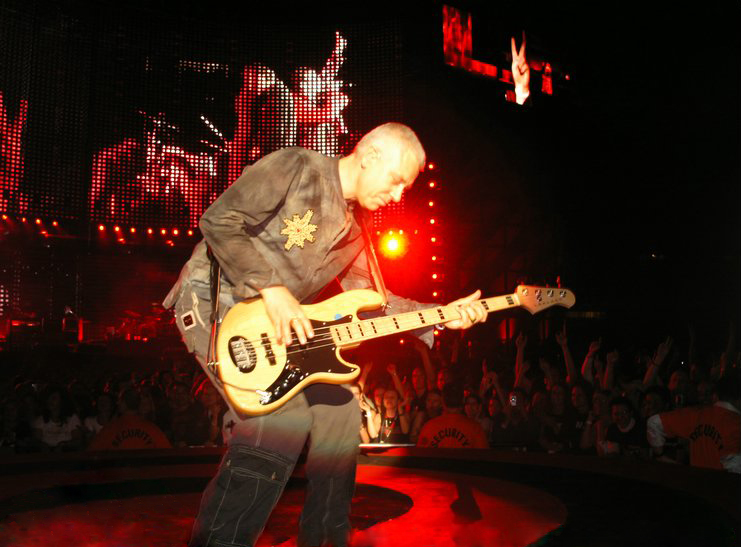
1960: U2 bass player Adam Clayton is born in England. His family moved to the beautiful little village of Malahide, Co. Dublin when he was five years age. He was friendly with U2’s Edge (Dave Evans) from childhood. The two would eventually form U2 with Larry Mullen and Paul Hewson (Bono).
Adam Clayton

shamrock

2005: U2 Inducted to Rock n Roll Hall of Fame

On Adam Clayton’s birthday U2 are inducted into the Rock n Roll Hall of Fame by another great performer with Irish roots Bruce Springsteen.

shamrock

.

** ** **

Want to learn more about Ireland? See these images and more in the acclaimed For the Love of Being Irish

Irish gift ideas. Best selling Irish booksRonnie Drew and Luke Kelly - Musical Irish Gifts to the worldJoyce Image in For the Love of Being IrishMichael Collins: Image from For the Love of Being Irish

___________________________________

This history is written by Irish author, business keynote speaker and award winning humorist IrishmanSpeaks – Conor Cunneen. If you spot any inaccuracies or wish to make a comment, please don’t hesitate to contact us via the comment button.

Visit Conor’s YouTube channel IrishmanSpeaks to Laugh and Learn.

Tags: Best Irish Gift, Creative Irish Gift, Unique Irish Gifts, Irish Books, Irish Authors, Today in Irish History TODAY IN IRISH HISTORY (published by IrishmanSpeaks)


March 12,

The Man who gave us “Boycott” – Jockey Pat Taffe at Today in Irish History

March 12: TODAY in Irish History:

** ** **

Charles Boycott 1832-1897

Snippets of Irish History by Conor Cunneen IrishmanSpeaks 

Conor is a Chicago based Motivational Humorous Business Speaker, Author and History buff.

***********************
WATCH: A Short History of Ireland

***********************

1832: Captain Charles Boycott

Charles Boycott 1832-1897

Charles Boycott 1832-1897

The man who gave the English language the word “boycott” is born Charles Cunningham Boycott in England. Boycott was an English landlord who was ostracized by his Irish neighbors, tenants and laborers after he attempted to evict a number of his tenants for non-payment of rent. The “boycott” was substantially instigated by Charles Stuart Parnell who on September 19 1880 a few days prior to the (non) action against Boycott had suggested in a speech that unfit landlords should be shunned: “Shun him in the streets of the town, you must shun him in the shop, you must shun him in the fairgreen and in the marketplace, and even in the place of worship, by leaving him alone, by putting him in a moral Coventry, by isolating him from the rest of his country as if he were the leper of old, you must show your detestation of the crime he has committed.”

On October 14th 1880, Boycott wrote to the The Times of London about his situation in Ireland.

THE STATE OF IRELAND

Sir, The following detail may be interesting to your readers as exemplifying the power of the Land League. On the 22nd September a process-server, escorted by a police force of seventeen men, retreated to my house for protection, followed by a howling mob of people, who yelled and hooted at the members of my family. On the ensuing day, September 23rd, the people collected in crowds upon my farm, and some hundred or so came up to my house and ordered off, under threats of ulterior consequences, all my farm labourers, workmen, and stablemen, commanding them never to work for me again.

My herd has been frightened by them into giving up his employment, though he has refused to give up the house he held from me as part of his emolument. Another herd on an off farm has also been compelled to resign his situation. My blacksmith has received a letter threatening him with murder if he does any more work for me, and my laundress has also been ordered to give up my washing. A little boy, twelve years of age, who carried my post-bag to and from the neighbouring town of Ballinrobe, was struck and threatened on 27th September, and ordered to desist from his work; since which time I have sent my little nephew for my letters and even he, on 2nd October, was stopped on the road and threatened if he continued to act as my messenger.

The shopkeepers have been warned to stop all supplies to my house, and I have just received a message from the post mistress to say that the telegraph messenger was stopped and threatened on the road when bringing out a message to me and that she does not think it safe to send any telegrams which may come for me in the future for fear they should be abstracted and the messenger injured. My farm is public property; the people wander over it with impunity. My crops are trampled upon, carried away in quantities, and destroyed wholesale. The locks on my gates are smashed, the gates thrown open, the walls thrown down, and the stock driven out on the roads. I can get no workmen to do anything, and my ruin is openly avowed as the object of the Land League unless I throw up everything and leave the country. I say nothing about the danger to my own life, which is apparent to anybody who knows the country.

Boycott and his family (supported by Loyalist volunteers from the north of Ireland) were forced to bring in their own harvest (protected by a large police force) while being watched and jeered by tenants and local Irish. The boycott garnered national attention when the Captain wrote a letter to the London Times as to his situation.

.

READ: Relief of Captain Boycott

.

** ** **

.

1904: Thomas Corcoran – Medal of Honor Recipient

Thomas Corcoran recipient of the Medal of Honor for his actions during the Siege of Vicksburg dies.

Irish medal of honor winners

Corcoran’s citation reads:

“Served on board the U.S.S. Cincinnati during the attack on the Vicksburg batteries and at the time of her sinking. Engaging the enemy in a fierce battle, the Cincinnati, amidst an incessant fire of shot and shell, continued to fire her guns to the last, though so penetrated by shellfire that her fate was sealed. Serving bravely during this action, Corcoran was conspicuously cool under the fire of the enemy, never ceasing to fight until this proud ship went down, her colors nailed to the mast.”

He is buried in Calvary Cemetery New York.

.

** ** **

.

1930: Jockey Pat Taffe is born

Pat Taffe on wonder horse Arkle

Pat Taffe on wonder horse Arkle

Birth of legendary Irish jockey Pat Taffe. He is most famous for partnering Arkle, probably the greatest steeplechase horse ever to victory in three Cheltenham Gold Cups between 1964 and 1966, the King George VI Chase, two Hennessy Gold Cups, an Irish Grand National and a Whitbread Gold Cup. In a relatively drab Ireland of the 60s, Taffe and Arkle became rock stars, even having a chart topping song, sung by Dominic Behan called after the wonder horse. 


.

** ** **

.

.

** ** **

Want to learn more about Ireland? See these images and more in the acclaimed For the Love of Being Irish

Irish gift ideas. Best selling Irish booksRonnie Drew and Luke Kelly - Musical Irish Gifts to the worldJoyce Image in For the Love of Being IrishMichael Collins: Image from For the Love of Being Irish

___________________________________

This history is written by Irish author, business keynote speaker and award winning humorist IrishmanSpeaks – Conor Cunneen. If you spot any inaccuracies or wish to make a comment, please don’t hesitate to contact us via the comment button.

Visit Conor’s YouTube channel IrishmanSpeaks to Laugh and Learn.

Tags: Best Irish Gift, Creative Irish Gift, Unique Irish Gifts, Irish Books, Irish Authors, Today in Irish History TODAY IN IRISH HISTORY (published by IrishmanSpeaks)