Posts tagged ‘irish actors’

September 14,

Dublin-born Duke of Wellington Meets his Waterloo – Grace Kelly at Today in Irish History

September 14: TODAY in Irish History:

** ** **

Sir_Arthur_Wellesley,_1st_Duke_of_Wellington

Snippets of Irish History by Conor Cunneen IrishmanSpeaks 

Conor is a Chicago based Motivational Humorous Business Speaker, Author and History buff.

***********************

***********************

NEW                    NEW

Product Details

SHEIFGAB! Staying Sane, Motivated and Productive in Job Search.

An insightful, realistic, yet humorous book on the job search process by Today in Irish History Curator Conor Cunneen

Special accessible price for job seekers on Kindle of $2.99

.

shamrockshamrockshamrockshamrockshamrockshamrockshamrockshamrock

.

1852: Death of Dublin born Duke of Wellington

The Duke of Wellington meets his Waterloo peacefully at the age of 83. He was born in Dublin in what is now The Merrion Hotel.

.

Sir_Arthur_Wellesley,_1st_Duke_of_Wellington
Dublin born Duke of Wellington 1769-1852

.

Famous for his victory over Napoleon at Waterloo, where it is estimated at least 25% of his troops were Irish, he went on to have a distinguished political career.

In 1828, he became Prime Minister of the United Kingdom, the first Irish born person to do so. Although on record as making disparaging remarks about his birthland, as Prime Minister he steered through the Catholic Emancipation Act of 1829 under pressure from Daniel O’Connell which allowed Catholics (with restrictions) become Members of Parliament.

.

Irish artist Daniele Maclise’s portrayal of the Duke of Wellington meeting with German ally Blucher after Waterloo

.

READ: Detailed biography of Duke of Wellington

.

.

shamrockshamrockshamrockshamrockshamrockshamrockshamrockshamrock

.

1901: DEATH OF IRISH AMERICAN PRESIDENT McKINLEY AFTER ASSASSINATION ATTEMPT

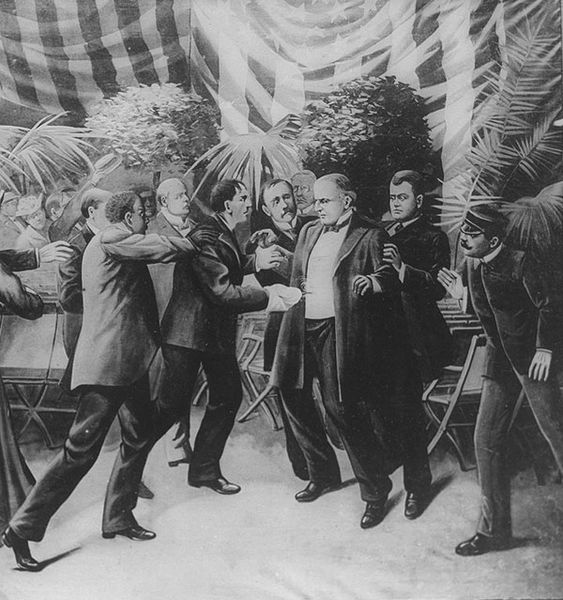
Eight days after being shot by anarchist Leon Czolgozc, President William McKinkley dies of his wounds. McKinley was of Scotch-Irish descent. His great-great-grandfather James McKinley had emigrated from Conagher, Ballymoney around 1743.

.

Artist representation of McKinleyAssassination
Artist representation of McKinley Assassination
.

shamrockshamrockshamrockshamrockshamrockshamrockshamrockshamrock

.

DAIL VOTES TO APPOINT PLENIPOTENTIARIES TO NEGOTIATE WITH BRITAIN

1921: The Dail votes to appoint plenipotentiaries to negotiate with Britain re Irish independence. In what would turn out to be a momentous decision, De Valera opted NOT to be one of the negotiators stating that the Irish parliament  “recognised themselves but no one else did. He really believed it was vital at this stage that the symbol of the Republic should be kept untouched and that it should not be compromised in any sense by any arrangements which it might be necessary for our plenipotentiaries to make. He was sure the Dáil realised the task they were giving to them—to win for them what a mighty army and navy might not be able to win for them. It was not a shirking of duty, but he realised the position and how necessary it was to keep the Head of the State and the symbol untouched and that was why he asked to be left out.”

Afte meeting in private session, Dáil Éireann met in private session in the Mansion House, the following Plenipotentiaries were unanimously ratified:

Mr. Arthur Griffith, Minister for Foreign Affairs, Chairman.

Mr. Michael Collins, Minister of Finance.

Commandant R.C. Barton, Minister of Economic Affairs.

Mr. E.J. Duggan, representative of Meath and Louth.

Mr. George Gavan Duffy, Irish Envoy at Rome, representative of Dublin County.

READ: Dail Debates For more on PEACE NEGOTIATIONS—RATIFICATION OF PLENIPOTENTIARIES

.

Michael Collins and Arthur Griffith

.

.

shamrockshamrockshamrockshamrockshamrockshamrockshamrockshamrock

.

DEATH OF GRACE KELLY

1982: Death of the icon of every Irish mother: actress and real life Princess, Grace Kelly. Kelly was killed following a car crash which may have been precipitated by a stroke. Grace Kelly’s grandfather, John Kelly, was born in 1857 in Co. Mayo. Thirty years later, he emigrated to Philadelphia, where he founded a successful construction company. Kelly was proud of her Irish roots. When she visited in 1961, the country went crazy.

Kelly’s film credits include:

Dial M for Murder

Rear Window

High Noon

High Society

.

.

In 1956, to the delight of the social press, Kelly married Prince Ranier of Monaco in a “fairytale” wedding. They had three children.

.

shamrockshamrockshamrockshamrockshamrockshamrockshamrockshamrock

.

WATCH: A Short History of Ireland

Want to learn more about Ireland? See these images and more in the acclaimed For the Love of Being Irish

Irish gift ideas. Best selling Irish booksRonnie Drew and Luke Kelly - Musical Irish Gifts to the worldJoyce Image in For the Love of Being IrishMichael Collins: Image from For the Love of Being Irish

___________________________________

This history is written by Irish author, business keynote speaker and award winning humorist IrishmanSpeaks – Conor Cunneen. If you spot any inaccuracies or wish to make a comment, please don’t hesitate to contact us via the comment button.

Visit Conor’s YouTube channel IrishmanSpeaks to Laugh and Learn.

Tags: Best Irish Gift, Creative Irish Gift, Unique Irish Gifts, Irish Books, Irish Authors, Today in Irish History TODAY IN IRISH HISTORY (published by IrishmanSpeaks)


September 11,

Oliver Cromwell and The Siege of Drogheda – Glenroe Airs on RTE

September 11: TODAY in Irish History:

** ** **

Siege of Drogheda

Snippets of Irish History by Conor Cunneen IrishmanSpeaks 

Conor is a Chicago based Motivational Humorous Business Speaker, Author and History buff.

***********************

***********************

NEW                    NEW

Product Details

SHEIFGAB! Staying Sane, Motivated and Productive in Job Search.

An insightful, realistic, yet humorous book on the job search process by Today in Irish History Curator Conor Cunneen

Special accessible price for job seekers on Kindle of $2.99

.

shamrockshamrockshamrockshamrockshamrockshamrockshamrockshamrock

.

1649: The Sieged of Drogheda ends.

Drogheda, Co Louth which had been under siege since September 3 finally falls to Oliver Cromwell’s forces. What happens after ensures Cromwell will forever be the most hated Englishman in Irish history.

On Cromwell’s orders, the town was put to the sword. Military and civilians were slaughtered without mercy. An estimated 25% were civilians.

According to British Civil War: “Up to 6,000 Parliamentarians were in the town overwhelming all resistance and slaughtering officers and soldiers. A cavalry screen outside the walls prevented escape to the north. Catholic priests and friars were treated as combatants and killed on sight. Many civilians died in the carnage. A group of defenders who had barricaded themselves in the steeple of St Peter’s Church in the north of Drogheda were burned alive when the Parliamentarians set fire to the church. Around 2,000 people died in the storming and massacre of Drogheda; a number of prisoners who surrendered before Cromwell gave the order for no quarter were murdered in cold blood. Surviving members of the garrison captured the following day were transported to Barbados. Parliamentarian losses were around 150.”

.

Siege of Drogheda
Drogheda is put to the sword

.

Cromwell could justify his actions on two counts (as he perceived it.)

1)      At that time, it was not unusual for garrisons that failed to surrender to be put to the sword and inhabitants massacred.

2)      The righteously religious protestant saw Catholics as essentially the spawn of the devil and saw it as revenge for the massacre of hundreds (and probably thousands) of Protestants by rebelling Irish Catholics in Ulster in 1641. “I am persuaded that this is a righteous judgement of God upon these barbarous wretches, who have imbrued their hands in so much innocent blood, and that it will tend to prevent the effusion of blood for the future, which are the satisfactory grounds for such actions, which otherwise cannot but work remorse and regret.”

Cromwell’s brutal logic did work,  as in short order Trim, Dundalk, Carlingford, Newry, and several other places in the North surrendered and their inhabitants spared.

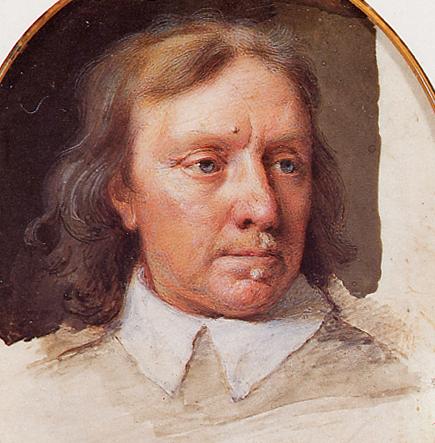
oliver cromwell siege of drogheda
The not very attractive Oliver Cromwell

.

As with so much of history, (Irish or not) one man’s terrorist is another man’s freedom fighter. In today’s world, Cromwell would surely be found guilty of war crimes. On the converse side according to Professor John Morrill at BBC History, Cromwell has more roads named after him than any other Englishman and woman except Queen Victoria! None in the Republic of Ireland!

.

READCromwell at Drogheda at Skeptic Ireland

.

shamrockshamrockshamrockshamrockshamrockshamrockshamrockshamrock

.

1983: First Episode of Glenroe airs on RTE

You kind of had to be there. Glenroe was one of RTE’s most popular productions featuring a wonderful cast of character based in rural Ireland. The show would run for eighteen years.

The following clip of the opening credits will bring back memories for many. It is worth noting the comments to show what Glenroe meant to so many.

.

.

.

shamrockshamrockshamrockshamrockshamrockshamrockshamrockshamrock

.

WATCH: A Short History of Ireland

Want to learn more about Ireland? See these images and more in the acclaimed For the Love of Being Irish

Irish gift ideas. Best selling Irish booksRonnie Drew and Luke Kelly - Musical Irish Gifts to the worldJoyce Image in For the Love of Being IrishMichael Collins: Image from For the Love of Being Irish

___________________________________

This history is written by Irish author, business keynote speaker and award winning humorist IrishmanSpeaks – Conor Cunneen. If you spot any inaccuracies or wish to make a comment, please don’t hesitate to contact us via the comment button.

Visit Conor’s YouTube channel IrishmanSpeaks to Laugh and Learn.

Tags: Best Irish Gift, Creative Irish Gift, Unique Irish Gifts, Irish Books, Irish Authors, Today in Irish History TODAY IN IRISH HISTORY (published by IrishmanSpeaks)